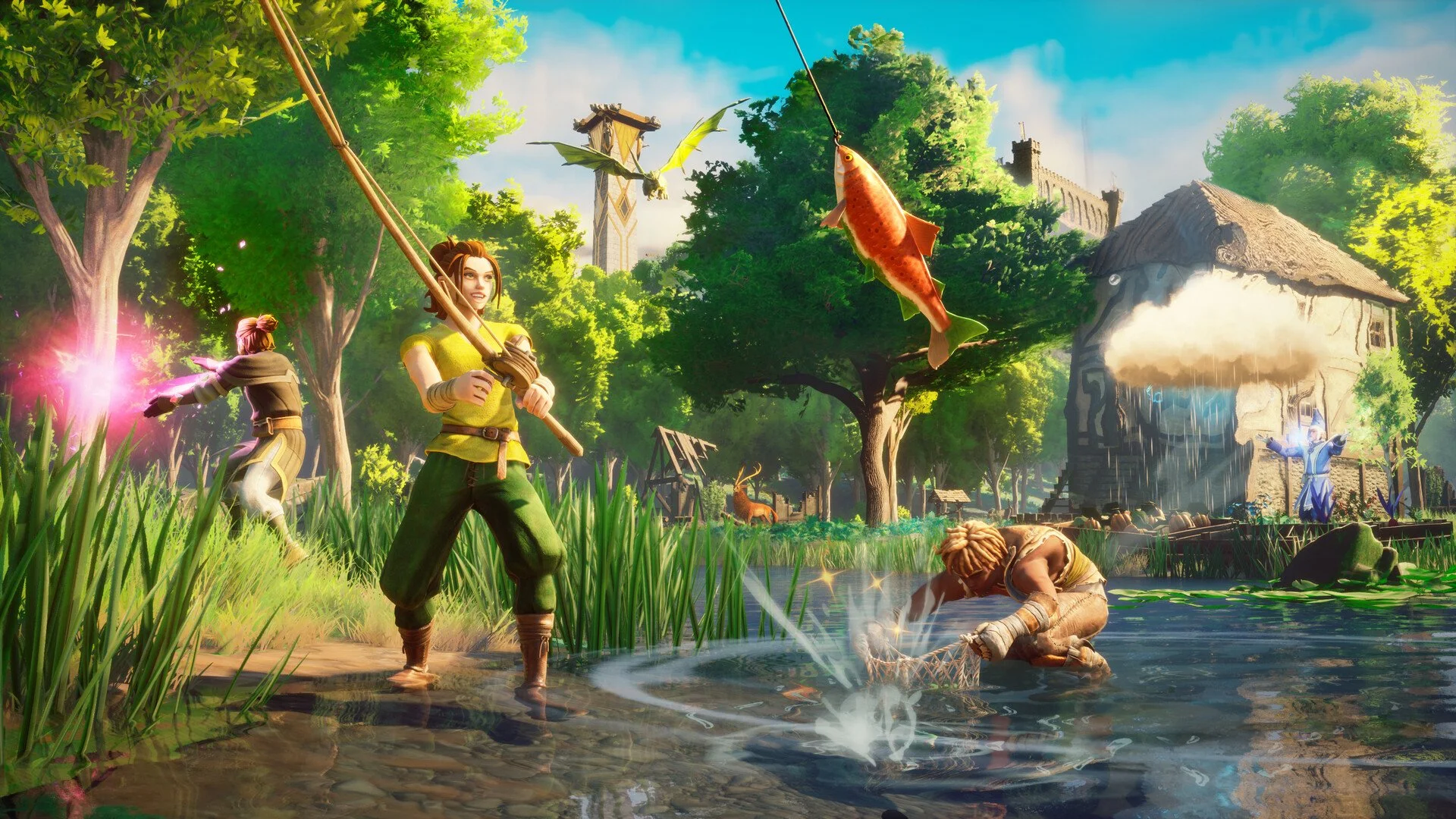
RuneScape Dragonwilds 1.0 is live in 2026 and has enough interconnected systems that a lot of wasted time doesn't come from doing something outright wrong. It comes from doing the right thing inefficiently: gathering resources before you know what they're for, building somewhere inconvenient, entering combat with no Stamina left to escape, or walking halfway across Ashenfall only to realize you forgot one item.
The full release makes that even more noticeable. Farming, mounts, Agility, new travel options, expanded storage tools, skill spells, revised combat, and the 1.0 equipment tiers all give you ways to remove friction from the game. The best tips aren't necessarily shortcuts; they're ways to make several systems work for you at the same time.
Jump To Section:
Scout New Regions Before Farming Them
Treat Stamina as Emergency Health
Use Parries to Reset Fights
Process New Resources Immediately
Separate Healing From Buffs
Build Your Base Around Repeated Chores
Design Storage for Fast Deposits
Plan Trips Backwards From Home
Level Skills While Doing Something Else
Turn Farming Into Supply Insurance
Keep a Death Recovery Kit
Upgrade Your Tools Before Hoarding Materials
Scout New Regions Before Trying to Farm Them
When you reach a new region, I wouldn't make the first trip a full gathering run. Treat it as reconnaissance instead. Bring enough supplies to survive, leave several inventory slots empty, activate anything useful for travel, grab samples of unfamiliar materials, and figure out which enemies and resources are actually worth returning for.
This works particularly well in Dragonwilds because simply acquiring and processing unfamiliar materials can expose the next part of your crafting progression. You don't need 80 of something you don't understand yet. You need enough to bring home, process, and see what it actually leads to.
That changes the normal survival-game instinct of vacuuming up everything you see. Your first trip answers questions; your second trip carries the inventory space and tools needed to exploit what you found.
Treat Your Last Chunk of Stamina Like Emergency Health
Your health bar isn't the only thing keeping you alive. If you spend the last of your Stamina attacking, you may have technically maximized your damage while removing your ability to sprint, dodge, or otherwise respond when the enemy attacks back.
I prefer thinking about the bottom portion of the Stamina bar as untouchable unless I'm confident the fight is ending. It isn't unused damage; it's an emergency reserve.
This becomes even more important against unfamiliar enemies. Until you've learned an attack pattern, don't budget your Stamina around the assumption that your current combo will be safe. Leaving the fight with 30% Stamina and slightly less damage dealt is usually better than reaching zero at exactly the moment you discover the enemy has another attack.
A Successful Parry Is Basically a Combat Reset in 1.0
Parrying became significantly more valuable with the 1.0 combat changes because a successful parry restores 50% of your maximum Stamina and creates an opportunity for a Visceral Attack.
The obvious use is offensive: parry, get Stamina back, then punish the enemy. I think the more useful habit is recognizing that you don't always need to immediately spend the Stamina you just recovered.
If a fight is getting messy, the parry itself can be your reset button. Recover the Stamina, reposition, create space, and turn a bad situation back into a controlled one. The Visceral opening is valuable, but surviving is worth more than squeezing every possible attack out of every successful defensive action.
It's also why I wouldn't judge blocking and parrying purely by how much damage they prevent anymore. A good parry can actively restore the resource that controls much of the rest of your combat decision-making.
Don't Just Collect New Resources — Process One Immediately
Picking up one of every unfamiliar resource is useful, but I would take that rule one step further: when you get home, try to process it.
Raw materials aren't always the end of the discovery chain. Turning something into a bar, plank, thread, leather, or another processed ingredient can expose the recipes that actually explain why you care about it.
That means your progression loop should be discovery, sample, process, then farm. Doing it in that order prevents you from spending an entire trip gathering a material only to discover that your next equipment upgrade requires something completely different—or that you're missing the station or tool required to make use of it.
It's a small habit, but Dragonwilds rewards curiosity enough that bringing home one weird item can sometimes be more useful than bringing home another full stack of something you've already stockpiled.
Separate Your Healing Supply From Your Buff Supply
Healing potions are no longer your combat safety net in Dragonwilds. Food handles direct healing, while potions are still useful for improving stats and preparing for difficult encounters.
I would therefore stop treating every consumable as one generic pile of “combat supplies.” Before a difficult trip, ask two separate questions: how am I restoring lost health, and what am I using to make the fight easier in the first place?
Cooked food answers the first question. Potions, equipment, ammunition, runes, and other preparation answer the second.
There's another useful quirk here: being full doesn't prevent you from eating for healing. That makes dedicated healing food worth carrying even if your hunger needs are already handled. I'd rather enter a dangerous area with several reliable heals I never use than a full inventory of materials and no way to recover after one ugly fight.
Choose a Base Location by the Chores You'll Repeat 100 Times
A base beside a valuable ore deposit can look perfect until that ore stops being important and you're still walking back and forth for water every time you farm.
For a long-term base, prioritize the inconveniences that never really disappear. Water access, useful travel connections, room for crafting and storage, safe usable space, fishing, and resources with long-term utility generally matter more to me than being directly beside whatever material happens to be blocking progression right now.
This is especially important after 1.0 because Ashenfall gives you more ways to solve distance as you progress. Mounts, Lodestones, Home Teleport, Kebbit Burrows, Agility movement, and skill spells can all make a resource that's farther away much less annoying. You can't make a cramped base layout or terrible access to everyday necessities disappear as easily.
So don't ask only, “What is near this base?” Ask, “What annoying trip will I no longer have to make if I live here?” That's usually a better way to find a location you'll still like dozens of hours later.
Build Your Storage for Returning Home, Not Browsing Chests
Dragonwilds now has multiple systems that reduce inventory busywork. You can craft and build using materials from nearby chests, while the Storage Ledger can deposit matching inventory items into linked storage.
That changes what a good crafting room should accomplish. You don't need to design storage around manually opening every chest whenever you need a recipe. Instead, I would keep commonly used storage near the relevant crafting area, organize it consistently, and make returning from an expedition as close to a single dump-and-process routine as possible.
The goal is to reduce the number of times you touch the same resource. Bring it home, get it into the appropriate storage, process whatever needs processing, repair or restock, and leave again.
A beautiful storage warehouse on the opposite side of your base may look great, but if you cross your compound every five minutes to interact with it, you've effectively built yourself another loading screen.
Plan Long Trips Backwards From How You're Getting Home
One of the easiest ways to make exploration more efficient is to decide how the trip ends before deciding how far you're willing to go.
Home Teleport can return you to your claimed bed for 15 Law Runes, with a 15-minute cooldown. That means a journey doesn't always need to be planned as a round trip. You can travel outward through several locations, fill your inventory farther and farther from home, then teleport back once the trip has actually paid for the rune cost.
That makes your claimed bed more than a respawn point. It's also the destination of a travel ability, so make sure the bed you've claimed is actually where you want your expeditions to terminate.
I also wouldn't automatically Home Teleport the second your inventory fills if you're already near a Lodestone, Kebbit Burrow, or another useful route. Save the spell for journeys where it removes a genuinely annoying return leg. The value isn't the teleport itself; it's the walking time you delete.
Stop Grinding Skills That Can Level While You're Progressing
Dragonwilds has enough skills that deliberately grinding all of them as isolated activities can turn the game into work very quickly. In most cases, I'd first ask whether the skill can be trained while accomplishing something else you already need.
Need building materials? That's Woodcutting and Mining progression. Travelling to a new quest? You're moving around the world and developing Agility. Need supplies? Fishing, Cooking, Farming, and gathering can all feed directly back into the resources you were going to use anyway.
This doesn't mean dedicated training is never useful, especially when you're pushing toward a specific unlock. It means grinding should solve a bottleneck. If your next meaningful upgrade requires a certain skill level, grind it. If it doesn't, continuing the rest of the game may level that skill for you without creating a separate chore.
The same logic applies to combat styles. You don't need every combat skill at exactly the same level before you're allowed to progress. Develop alternatives enough that you have options, then put more time into the style that actually supports the content you're attempting.
Use Farming as Supply Insurance, Not Just Another Skill to Level
Farming becomes much more valuable when you stop looking at crops as Farming XP and start looking at the garden as a predictable source of future consumables.
Ingredients that support alchemy, healing, and combat buffs are much easier to rely on when you're producing them at home instead of hoping your next gathering route replaces everything you consumed during the previous boss fight.
That's why I would get at least a functional farming setup going fairly early rather than waiting until you're ready to seriously level Farming. It doesn't need to be enormous. Its first job is simply to reduce how often preparation for another activity sends you back into the world looking for basic ingredients.
This is also another reason I value water so highly when choosing a base. A resource being five minutes away may be acceptable when you need it once. Water being inconvenient becomes considerably more annoying when farming turns it into part of your regular routine.
Keep a Second Loadout for Recovering Your Gravestone
Don't wait until you're standing naked at your bed to figure out how you're going to recover everything you just lost.
Death places your carried equipment in a gravestone, so I like treating a small amount of spare gear as untouchable recovery equipment. Keep a basic weapon, food, and whatever inexpensive tools or supplies you'd need to safely reach a dangerous area without borrowing from the exact loadout currently sitting inside your gravestone.
This matters even more on Hard difficulty, where dying again before recovering the previous gravestone destroys its contents. Your recovery attempt is therefore not the time to sprint back completely unprepared because you're annoyed that you died.
A cheap backup kit sitting unused for most of the game might seem wasteful. The first time it prevents one death from turning into two, it has done its job.
Upgrade the Tool Before Farming the Material
When a new equipment tier opens, it's tempting to immediately begin hoarding whatever ore, wood, or other material appears to be required. Check the required gathering tool first.
In 1.0, Runite and Luminite require an Adamant Pickaxe or better, while Magic Wood requires a Rune Logging Axe. Knowing where a resource exists doesn't help much if your equipment can't properly gather it.
I would therefore work backwards from the final upgrade. Find the equipment you want, identify its ingredients, identify which tools can obtain those ingredients, and upgrade the tool that unlocks the gathering route before spending time travelling there.
It also gives gathering tools an easy-to-miss economic value. A better weapon makes combat faster, but a better tool can unlock an entirely new material tier while also improving the trips you'll repeat many times afterward. If both upgrades are competing for the same limited resources, the tool may actually accelerate the weapon upgrade.
Use Your New Movement Options to Change How You Explore
Agility, mounts, movement spells, a second jump, and air movement mean you don't have to navigate Ashenfall exactly the way you did during the earliest versions of Dragonwilds.
When returning to an old region, look at the terrain again. A cliff, gap, or awkward route that originally dictated how you travelled through an area may no longer be much of an obstacle. Better movement can create shorter gathering routes and make previously inconvenient areas much more practical to revisit.
Mounts also aren't limited to one permanent choice once you've unlocked additional options or appearances. If you're trying to switch to another mount, carpet, or Terror Bird appearance, our RuneScape Dragonwilds mount and mount skin guide explains the surprisingly hidden menu used to change them.
The broader lesson is that progression in Dragonwilds doesn't only make you stronger. It changes which inconveniences you still need to tolerate. Every time you unlock a new travel, storage, gathering, or movement tool, reconsider something you were previously doing the slow way.