RuneScape Dragonwilds All Weapons Guide (1.0)
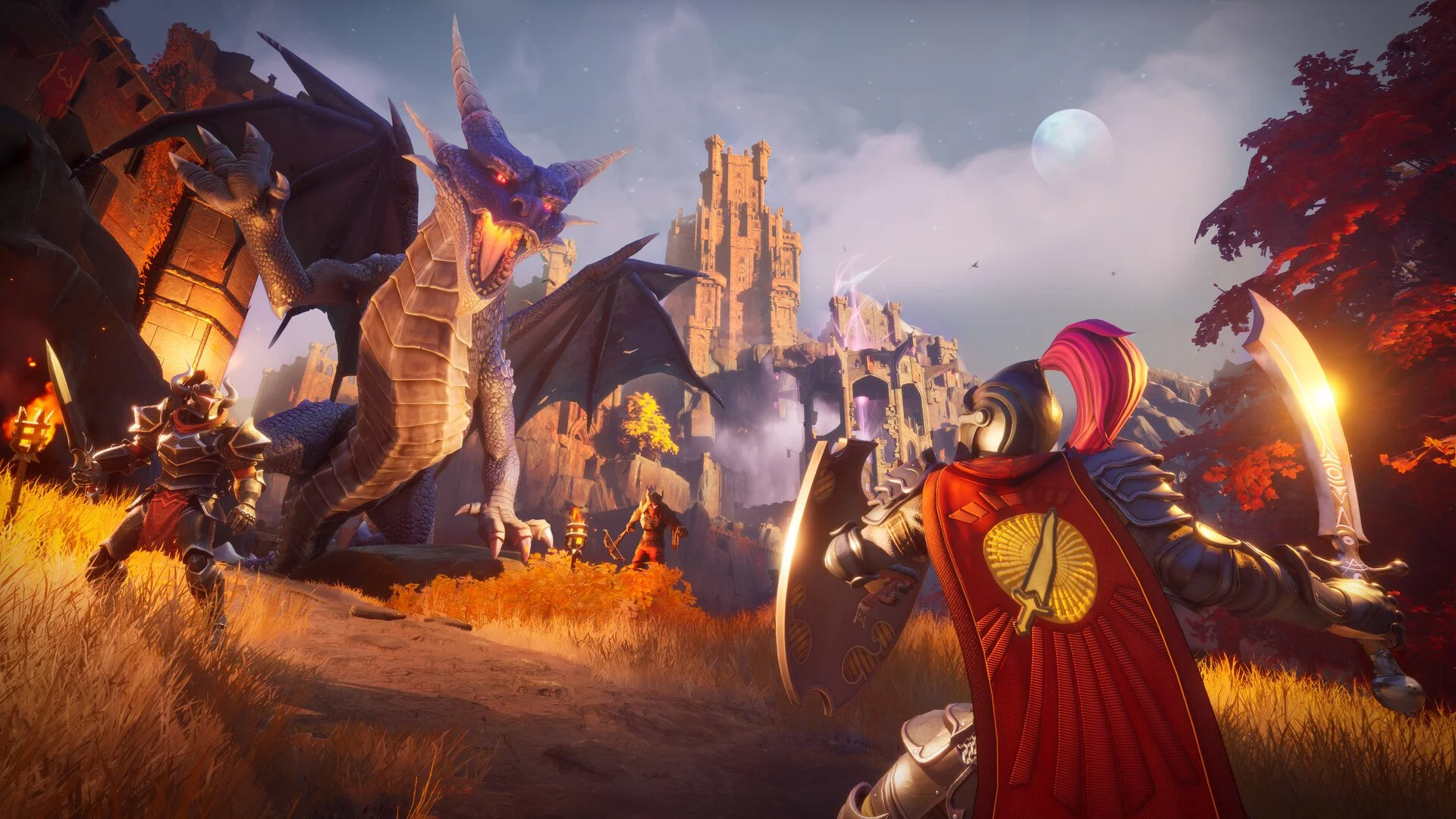
There are a lot more weapons in RuneScape Dragonwilds than simply crafting the newest sword every time you find a better metal. Melee alone branches into several completely different attack styles, ranged weapons handle distance in different ways, and 1.0 added Wands as an entirely new option for Magic builds.
The endgame has also changed significantly. Rune, Magic, and Ancestral weapons now extend normal progression beyond the old Early Access ceiling, while weapons such as the Dragon Scimitar, Dragon Crossbow, and Kuldra's Wrath sit even further into the 1.0 endgame.
This guide covers the current RuneScape Dragonwilds weapons as of September 20, 2026, along with how each weapon family actually differs and which special weapons are worth holding onto.
Jump To Section:
How Weapons Work in 1.0
All One-Handed Melee Weapons
All Two-Handed Melee Weapons
All Ranged Weapons
All Magic Weapons
Special Weapons Worth Keeping
New 1.0 Weapons
Which Weapon Type Should You Use?
How Weapons Work in RuneScape Dragonwilds 1.0
The first thing I would look at with any weapon is its Power Level, but I wouldn't stop there. Weapon tier tells you roughly where something belongs in progression; weapon type tells you how you're actually going to fight with it.
Standard progression moves from early Stone, Bone, and basic wood weapons into Bronze, Iron, Steel, Mithril, Adamant, and finally the new Rune-tier melee equipment. Bows progress through increasingly valuable woods before reaching Magic, while Magic builds can eventually reach Ancestral weapons.
Once two weapons are around the same Power Level, the comparison becomes much more interesting. Damage type, combo length, attack speed, stamina use, range, whether the weapon leaves your off-hand available, and any special effect can all matter more than a small difference in raw damage.
That's why I don't recommend treating this as a checklist where every new weapon automatically replaces the last one. A standard material weapon usually does. A specialist weapon sometimes doesn't.
The other useful rule is to stop trying to make one weapon answer every enemy in Ashenfall. I would rather carry one dependable primary weapon and a second weapon that covers a weakness in the first setup than fill half my inventory with tiny variations of the same attack type.
If you're still early enough that the entire crafting and combat loop is more important than optimizing a specific weapon, our RuneScape Dragonwilds tips and tricks guide covers several progression systems that are easy to miss on a first playthrough.
All One-Handed Melee Weapons
One-handed melee gives you the widest selection of conventional weapons in Dragonwilds. The big advantage is flexibility: you can still use an off-hand rather than committing both hands to your weapon, while daggers, maces, swords, scimitars, and whips all offer noticeably different ways to fight.
Here are the current one-handed melee weapons grouped by their closest weapon family.
Daggers: Stone Dagger, Bone Dagger, Bronze Dagger, Iron Dagger, Dragonbone Dagger, Steel Dagger, Wolfbane Dagger, Mithril Dagger, Adamant Dagger, Keris, Rune Dagger
Clubs and Maces: Wooden Club, Stone Club, Bone Club, Bronze Mace, Skullsplitter, Iron Mace, Zombie Arm, Steel Mace, Zombie Axe, Mithril Mace, Adamant Mace, Rune Mace
Swords and Scimitars: Wooden Training Sword, Goblin "Swingslash", Chieftain's Blade, Bronze Sword, Iron Sword, Steel Sword, Steel Scimitar, Imaru's Talon, Mithril Sword, Mithril Scimitar, Black Sword, Adamant Sword, Adamant Scimitar, TokTz-Xil-Ak, Rune Sword, Rune Scimitar, Dragon Scimitar
Whips: Abysmal Whip, Abyssal Whip
Daggers are the fast-combo option. Individual hits aren't what make them appealing; you're trading some per-hit weight for a longer, quicker sequence. They also have some unusually good specialist variants, including Wolfbane Dagger and the Kalphite-focused Keris.
Maces and clubs sit on the heavier end of one-handed combat and are particularly useful when Crush is the damage type you need. Zombie Axe is one of the more interesting exceptions because it can deal both Slash and Crush damage, giving it much broader coverage than a normal material mace.
Swords are the most straightforward middle ground, while Scimitars have their own more aggressive attack pattern. 1.0 also gives this family one of the game's main post-Rune chase weapons with the Dragon Scimitar.
Abysmal Whip vs Abyssal Whip
The two Whips deserve their own explanation because this changed for 1.0 and older Dragonwilds information can now send you after the wrong weapon.
The Abysmal Whip is the Power Level 4 version associated with Abyssal Demons. It still builds Bleed, but it does not have the full special attack of the real Abyssal Whip.
The true Abyssal Whip is now a Power Level 7 Masterwork weapon. Its progression has been pushed into Umbral Sands, and the Abysmal Whip becomes part of the path toward making the proper version.
In other words, if an older guide tells you that the Abyssal Whip itself is the PL4 weapon you obtain relatively early, that information predates the 1.0 rework.
All Two-Handed Melee Weapons
Two-handed melee is where I would look if I cared more about heavy attacks than preserving the flexibility of an off-hand. Greatswords, Greataxes, and Warhammers all occupy that broader role, but they shouldn't be treated as identical weapons with different models.
Greatswords: Bronze Greatsword, Iron Greatsword, Steel Greatsword, Shadow Sword, Mithril Greatsword, Titan's Wrath, Adamant Greatsword, Rune Greatsword
Greataxes: Iron Greataxe, Thane's Authority, Steel Greataxe, Mithril Greataxe, Black Greataxe, Adamant Greataxe, Rune Greataxe
Warhammers and Heavy Crush Weapons: Bronze Warhammer, Granite Maul, Iron Warhammer, Steel Warhammer, Mithril Warhammer, Adamant Warhammer, TzHaar-Ket-Om, Rune Warhammer
The main reason to learn more than one of these families is damage coverage. A giant Slash weapon isn't automatically the best heavy weapon just because its damage number looks good, particularly once you start running into enemies where Crush performs better.
The special versions make this even more obvious. Granite Maul has a purpose beyond being another early heavy weapon, Shadow Sword specializes against spectral enemies, Black Greataxe pushes damage higher at the cost of additional stamina, and Titan's Wrath brings its own offensive effects.
I would therefore compare the standard Rune versions as your dependable progression weapons, then judge named heavy weapons by the encounter rather than assuming every unusual weapon needs to replace your normal gear.
All Ranged Weapons in RuneScape Dragonwilds
Ranged has three weapon families: Shortbows, Longbows, and Crossbows. This is one of the places where the weapon type itself matters more than the name on the current material tier.
Shortbows are the more flexible bow option. Longbows trade speed and close-range comfort for substantially stronger long-distance shots. Crossbows occupy a different niche entirely because they are one-handed, fire bolts instead of arrows, and let you retain an off-hand.
Shortbows: Ash Shortbow, Wild Scout's Shortbow, Oak Shortbow, Crystal Bow, Blightwood Shortbow, Willow Shortbow, Undead Ranger's Bow, Maple Shortbow, Yew Shortbow, Magic Shortbow
Longbows: Adventurer's Longbow, Oak Longbow, Blightwood Longbow, Hunter Stagbow, Willow Longbow, Ulv's Longbow, Maple Longbow, Yew Longbow, Bow of Elidinis, Magic Longbow
Crossbows: Bronze Crossbow, Blurite Crossbow, Iron Crossbow, Dorgeshuun Crossbow, Steel Crossbow, Mithril Crossbow, Shadow Crossbow, Adamant Crossbow, Rune Crossbow, Dragon Crossbow
If I'm entering an encounter where I can reliably create distance before firing, the Longbow's larger individual shots make far more sense. If I'm constantly moving and reacting, Shortbows are less cumbersome. Crossbows are the choice I find most structurally different because keeping an off-hand available gives them combinations the other ranged families simply can't copy.
Ammunition adds another layer here as well. Crossbows can take advantage of different bolt effects, while bow users can swap between arrow types rather than relying only on the bow itself to determine what their attacks do.
This is also why I'd avoid asking which ranged weapon is universally best. A Magic Longbow, Rune Crossbow, and Dragon Crossbow may all exist at the upper end of progression, but they're built around different range, ammunition, and positioning decisions.
All Magic Weapons: Wands and Staves
Magic arguably changed more than any other weapon category in 1.0 because Wands finally give casters a second fundamental weapon style.
Wands: Ash Wand, Oak Wand, Blightwood Wand, Splitbark Wand, Maple Wand, Master Wand, Ancestral Wand, Kuldra's Wrath
Staves: Ash Battlestaff, Grieving Moon Staff, Oak Battlestaff, Blightwood Battlestaff, Draconic Staff, Staff of Light, Splitbark Staff, Necromancer's Staff, Maple Battlestaff, Subjugation Staff, Zamorak Staff, Master's Staff, Pharaoh's Sceptre, TokTz-Mej-Tal, Ancestral Staff
The easiest way to understand the choice is mobility versus the heavier Staff toolkit.
Wands are one-handed and let you cast while moving. That makes them much easier to use when a fight is constantly forcing you to reposition, and it also leaves your other hand available. Their downside is that they don't simply inherit everything Battlestaves can do.
Battlestaves remain two-handed and retain their more powerful secondary magic attacks. Those secondary attacks also behave differently depending on the rune you're using, which gives Staff combat an extra layer of utility instead of merely being a slower Wand with a larger number attached.
That distinction is why I wouldn't treat Ancestral Wand as an automatic replacement for Ancestral Staff. They're two endgame answers to two different versions of a Magic build.
Kuldra's Wrath then sits beyond the normal Wand ladder as one of the major 1.0 endgame rewards.
Special Weapons Worth Keeping
A list of names doesn't really explain the most useful part of Dragonwilds' weapon system: some of the weird weapons remain relevant because they're weird.
Standard Bronze, Iron, Steel, Mithril, Adamant, and Rune weapons are mostly easy to understand. Their job is to move your conventional equipment forward. Named and Vestige weapons are much more likely to bend that normal progression with enemy bonuses, multiple damage types, improved critical hits, different draw behavior, or unique special attacks.
Wolfbane Dagger is the obvious example of a weapon built around a specific enemy family. Keris does the same thing for Kalphites. Black Sword gains value when you're fighting mages, while Zombie Axe can cover both Slash and Crush instead of forcing you to commit to only one.
Ranged has similar exceptions. Crystal Bow gets its own Scattershot special, Ulv's Longbow rewards opening on unsuspecting targets, and Shadow Crossbow emphasizes weak-point damage rather than simply copying the normal Mithril Crossbow.
Magic might benefit from this mentality even more. Subjugation Staff has a specific anti-demon use, while Zamorak Staff pushes you toward Fire instead of remaining equally suited to every elemental setup.
That's why I wouldn't automatically dismantle, discard, or ignore every named weapon the moment its original Power Level looks old. If the effect solves a problem your generic weapon can't solve, it still has a reason to exist. Ascension also gives eligible weapons another path forward instead of forcing every unusual weapon to remain permanently stuck at its original tier.
What Weapons Were Added in Dragonwilds 1.0?
The September 2026 release pushed every major combat style beyond where it ended during Early Access.
Melee received Rune Dagger, Rune Mace, Rune Greataxe, Rune Greatsword, Rune Sword, Rune Scimitar, and Rune Warhammer. The Dragon Scimitar then gives one-handed Slash users an additional raid-tier weapon beyond normal Rune progression.
Ranged received Magic Shortbow, Magic Longbow, and Rune Crossbow. The Dragon Crossbow is another step beyond normal crafting and comes from repeat runs of the Scorned Wilderness endgame.
Magic received the entire Wand archetype alongside Ancestral Wand, Ancestral Staff, and Kuldra's Wrath. That's much more significant than simply adding another material tier because Magic now has a genuine choice between mobile one-handed casting and the traditional two-handed Staff playstyle.
The other change returning players need to remember is the Whip rework. The PL4 weapon is now the Abysmal Whip, while the actual Abyssal Whip has been moved much later into progression as a PL7 Masterwork weapon.
That makes older Early Access weapon guides especially risky around the top end. Adamant, Yew, and Master's gear are still meaningful, but they are no longer the final conventional weapon tier available in 1.0.
Which Weapon Type Should You Use?
I wouldn't pick a permanent weapon class before you've actually tried the movesets. Dragonwilds gives enough mechanical differences between them that the weapon you enjoy fighting with matters almost as much as the theoretical numbers.
If you want fast melee combos, start with Daggers. If you want a heavier one-handed weapon and useful Crush coverage, Maces make more sense. Swords and Scimitars are an easier middle ground, while Greatswords, Greataxes, and Warhammers are for players comfortable committing more heavily to each attack.
For ranged combat, Shortbows make more sense when you're frequently moving or fighting at less-than-perfect distances. Longbows are much better suited to deliberate ranged attacks where you can maintain space. Crossbows are my pick when the one-handed setup itself is important.
Magic is now just as clear. Use a Wand if you value movement and the one-handed setup. Use a Staff if you're willing to sacrifice that mobility for the deeper secondary-attack toolkit.
What I wouldn't do is obsess over one class to the point that you refuse to carry an answer for a bad matchup. Even a very strong Slash weapon becomes less appealing when the thing in front of you is much easier to kill with Crush, Magic, or ranged damage.
How I Would Handle Weapon Progression
For normal crafted weapons, I would prioritize keeping pace with the material tier you're currently capable of making. There isn't much benefit to stubbornly holding onto an ordinary Bronze Sword once you're comfortably producing equipment several tiers above it.
Then I would build outward rather than replacing everything. Keep your main weapon current, add one useful alternative damage type or ranged option, and hold onto named weapons that provide effects you can't reproduce with generic equipment.
This approach also keeps the crafting grind under control. Trying to make every weapon at every new material tier burns resources for very little practical benefit, especially once your recipes begin pulling materials from several regions.
Base location starts mattering more for exactly that reason. Late-game weapon progression isn't only about finding ore; it's the repeated trip between mining, gathering, processing, storage, and crafting. Our best base locations in RuneScape Dragonwilds are picked largely around reducing that kind of repeated friction rather than simply finding the prettiest place to build.
Mounts become useful for the same reason once your weapon materials and recipe hunts start spreading across Ashenfall. If you've unlocked another ride but can't find where to equip it, our RuneScape Dragonwilds mount and mount skin guide shows where the option is hidden.
Do You Need Every Weapon for Completion?
You don't need to treat every weapon as part of one enormous mandatory upgrade ladder. A lot of the arsenal exists to provide alternate playstyles, special effects, quest rewards, or specialist counters rather than functioning as a required stop on your way to Rune equipment.
Completionists will naturally encounter much more of that arsenal because recipes, quests, bosses, regional progression, and late-game encounters overlap heavily with broader completion goals.
If you're trying to clean up everything rather than simply finish your combat build, our RuneScape Dragonwilds trophy and achievements guide covers the wider completion requirements.
Final Weapon Tips for Dragonwilds 1.0
The biggest thing I would take away from the full weapon list is that the progression ladder and the weapon meta aren't quite the same thing.
Your material tier matters because walking into later content with badly outdated equipment is going to make everything harder. But once your weapon is appropriate for the content, damage type, moveset, range, stamina, off-hand access, and special effects start separating weapons that initially look interchangeable.
For most of the game, I would keep one strong general-purpose weapon, one alternative that covers a different situation, and any genuinely useful special weapons you've found. That's enough flexibility without turning every resource run into an attempt to maintain ten different weapons.
And for returning players, remember that 1.0 moved the ceiling. Rune, Magic, and Ancestral equipment now form the new conventional endgame, while the Dragon Scimitar, Dragon Crossbow, Kuldra's Wrath, and other specialist rewards give you something to chase beyond it.