

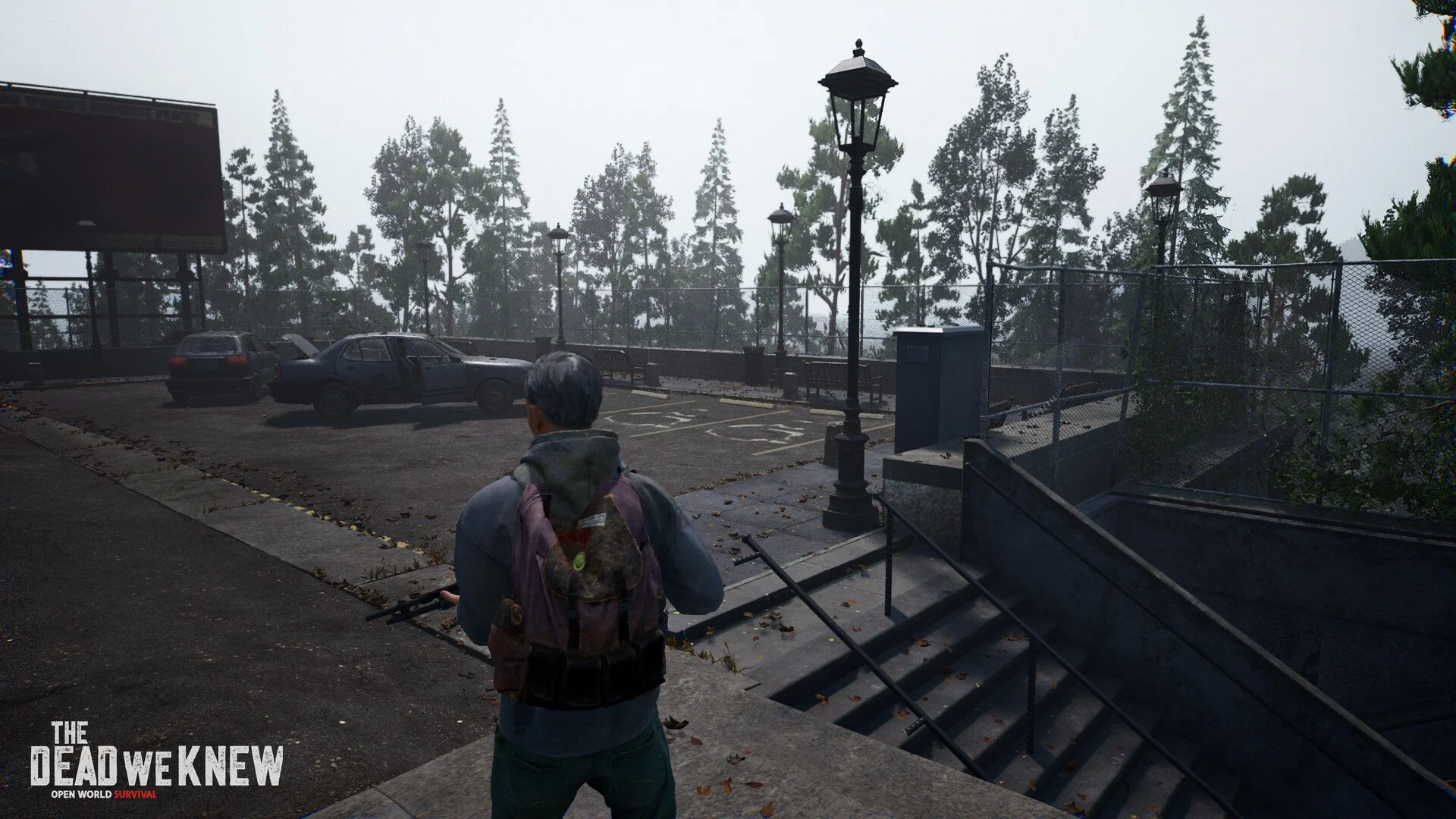
The Dead We Knew drops you into its Early Access survival loop with very little room for wasted resources. Weapons have to be crafted before you can properly defend yourself, inventory mistakes can interrupt early progression, food and shelter need constant attention, and the fog makes an ordinary scavenging trip considerably more dangerous. These tips focus on getting established quickly while working around some of the current Early Access quirks that can make the opening hours harder than they need to be.
Jump To Section:
Best The Dead We Knew Tips
Craft a Weapon Before Exploring
Keep Inventory Space Open
Collect Crafting Materials Early
Prepare Before the Fog Arrives
Do Not Spam Melee Attacks
Build a Renewable Food Supply
Build for Survival Before Size
Plan Around Losing Gear
Learn the Current Menu Controls
Divide Jobs in Co-Op
Best The Dead We Knew Tips and Tricks
Your first goal in The Dead We Knew should be stability rather than exploration. Get a usable weapon, preserve enough inventory space to craft, establish where your basic materials are coming from, and start putting food and shelter in place before roaming farther from your starting area. Once that foundation is established, use the safer parts of the day to scavenge and treat worsening weather or fog as a reason to reconsider how far you want to push from home.
- Craft an axe or another usable weapon before committing to a long scavenging trip.
- Keep at least one inventory slot free when completing early crafting objectives.
- Pick up brush materials and other highlighted resources whenever you find them.
- Use clear weather and daylight to handle longer resource runs.
- Return toward shelter when heavy fog begins making visibility unreliable.
- Use deliberate melee swings instead of hammering the attack input.
- Start hunting, cooking, and growing food before scavenged supplies become your only option.
- Store useful resources instead of carrying your entire supply into dangerous areas.
- Learn the inventory and building menu controls before opening both during combat.
- In co-op, separate scavenging, food, construction, and defense work instead of having everyone chase the same objective.
Craft a Weapon Before Exploring Too Far
The Dead We Knew does not currently give you a reliable unarmed fallback against zombies. That makes your first usable weapon part of your survival kit rather than something you can postpone until after exploring.
The axe is especially useful early because it gives you a way to defend yourself while you are still gathering the materials needed for everything else. Before heading deep into abandoned buildings or unfamiliar sections of the map, make sure you can actually fight your way back out if a zombie blocks the route.
This also changes how you should treat the opening resource pickups. A material that contributes toward your first weapon is worth more during the first few minutes than something intended for a larger base project. Get yourself capable of fighting first, then start thinking about expansion.
Keep Inventory Space Open While Crafting
Inventory management deserves attention immediately in the current Early Access build. It is possible to fill your bag with the sticks, rocks, and other materials scattered around the starting area before completing the opening crafting steps.
That can create problems when you need room for the item being crafted. Early players have encountered situations where the crafting material was consumed while the resulting item could not be added properly because the inventory was already full.
Until that behavior is patched, leave some breathing room in your bag whenever the tutorial or a recipe is about to produce a new item. Picking up everything you see is normally a sensible survival-game instinct, but here it can work against you if there is nowhere for the finished item to go.
Collect Brush and Crafting Materials When You See Them
Do not assume every visible plant or piece of vegetation can simply be harvested for materials. The current gathering system relies heavily on interactable resources and highlighted pickups placed throughout the environment.
This matters early because rope is required for useful crafting, including your first axe, and the materials needed to make it may have to be found rather than stripped directly from whatever brush happens to be nearby.
When you encounter a usable plant material, fabric, rope component, or another lightweight crafting resource, it is usually worth taking if you have the space. Large resources are easy to remember because they have an obvious purpose, while small crafting ingredients are the ones that tend to stop a recipe when you finally return to camp.
Prepare Before the Fog Arrives
The game's weather is more than visual atmosphere. Rain, changing wind, and dense fog can alter the conditions around you, and the fog is specifically associated with more dangerous zombie behavior while also cutting down how far you can see.
That makes the clear portion of the day the better time for long-distance scavenging. Use good visibility to search abandoned structures, hunt, gather materials, and learn the terrain around your shelter.
If the fog starts rolling in while you are already carrying a useful haul, pushing into one more unexplored location may not be worth it. Poor visibility makes navigation harder at the same time that zombie encounters become more dangerous, which is a bad combination when you are far from stored supplies.
Before leaving camp, it also helps to remember obvious landmarks along the route home. A trail that looks simple in daylight can become much harder to read once the environment disappears behind thick fog.
Do Not Spam Melee Attacks
Melee combat in the current Early Access build can behave poorly when attacks are entered too quickly. Rapid clicking can interrupt the axe animation instead of producing a smooth chain of swings, leaving your character stuttering through inputs while a zombie remains close enough to deal damage.
Give each swing enough time to register before starting another. Zombies can be staggered by successful axe hits, so controlled timing is more reliable than trying to overwhelm them with as many clicks as possible.
Spacing matters just as much. Damage can register when a zombie gets very close even when its attack animation is difficult to read, so backing away between swings gives you a better margin than standing directly against the enemy and trading hits.
Until combat receives more polish, treat melee encounters methodically: establish distance, commit to the swing, confirm the hit, reposition, then attack again.
Build a Renewable Food Supply Early
Food comes from several different systems, and relying entirely on whatever happens to be sitting inside abandoned locations leaves your survival tied to scavenging.
Hunting gives you another route. Deer can be killed and processed for meat, which can then be cooked over a fire. Farming adds a slower but renewable source by allowing vegetables such as tomatoes to be planted and grown around your settlement.
Use both systems rather than waiting until hunger becomes urgent. Hunting can cover immediate needs while crops develop in the background, and cooking lets you turn gathered ingredients into more substantial meals.
A shelter becomes much more useful once it supports your food loop rather than serving only as a place surrounded by walls.
Build for Survival Before Building for Size
The building system lets a small cabin grow into a much larger shelter, but there is little reason to spend the opening hours constructing an oversized base while your character still lacks dependable food, weapons, and stored resources.
Start with the parts of the shelter that support what you actually need: somewhere to return to, somewhere to organize supplies, room for crafting and rest, and enough protection to prepare for the night.
Expansion makes more sense once gathering trips are producing more materials than you immediately consume. At that point, extra space and stronger defenses solve real problems instead of draining the same resources you need to survive.
Your base should shorten the survival loop. If every new wall delays your next weapon, meal, or necessary craft, you are probably expanding faster than your supply chain can support.
Plan Around Losing Gear When You Die
Death can be particularly expensive while the game is still rough around the edges. Players are currently reporting that carried items are dropped on death without an obvious marker leading directly back to the lost backpack.
That makes carrying every useful material at once unnecessarily risky. Store excess supplies when you have the opportunity and take what you actually need for the next trip.
It is also worth remembering your route whenever you leave the shelter with valuable equipment. If you die several landmarks away from home, knowing the path you took gives you a much better chance of finding the drop again than wandering through the map hoping to recognize the exact location.
For dangerous scavenging trips, think in terms of what you can afford to lose. A backup supply of basic weapon materials at the shelter can keep one bad death from forcing you all the way back to the beginning of the crafting loop.
Learn the Current Menu Controls Before You Need Them
The current interface does not always behave the way you might expect from other survival games. The inventory is opened with Tab and currently needs to be closed with Tab again, while the building interface uses B in the same way.
Esc does not reliably act as a universal close button for these screens, and multiple menus can overlap if you open them together. More importantly, the world continues moving while those interfaces are covering your view.
Do your crafting and building somewhere you have already checked for danger. Opening several menus while a zombie is nearby is a good way to spend valuable seconds fighting the interface instead of the zombie.
Divide Jobs When Playing Co-Op
The Dead We Knew supports up to four-player co-op, and a larger group can accomplish much more if everyone is not collecting the same materials in the same location.
Once you have established a shared shelter, divide the immediate workload. One player can search abandoned structures for manufactured supplies while another gathers natural resources closer to home. Someone else can hunt or maintain food production, while the remaining player handles construction or stays prepared to help defend the group.
That division becomes even more useful before nightfall or bad weather. Instead of four players realizing at the same time that the base needs food, crafting materials, and repairs, each person can finish a different part of the preparation.
When the fog arrives, regrouping also gives the team more fighting power and reduces the chance that one player dies far from everyone else with a full inventory. The world is large enough to reward spreading out, but the dangerous periods of the day are where working together starts paying off.


