Diablo 4 Horadric Cube Guide: Transfigure Items & Best Uses
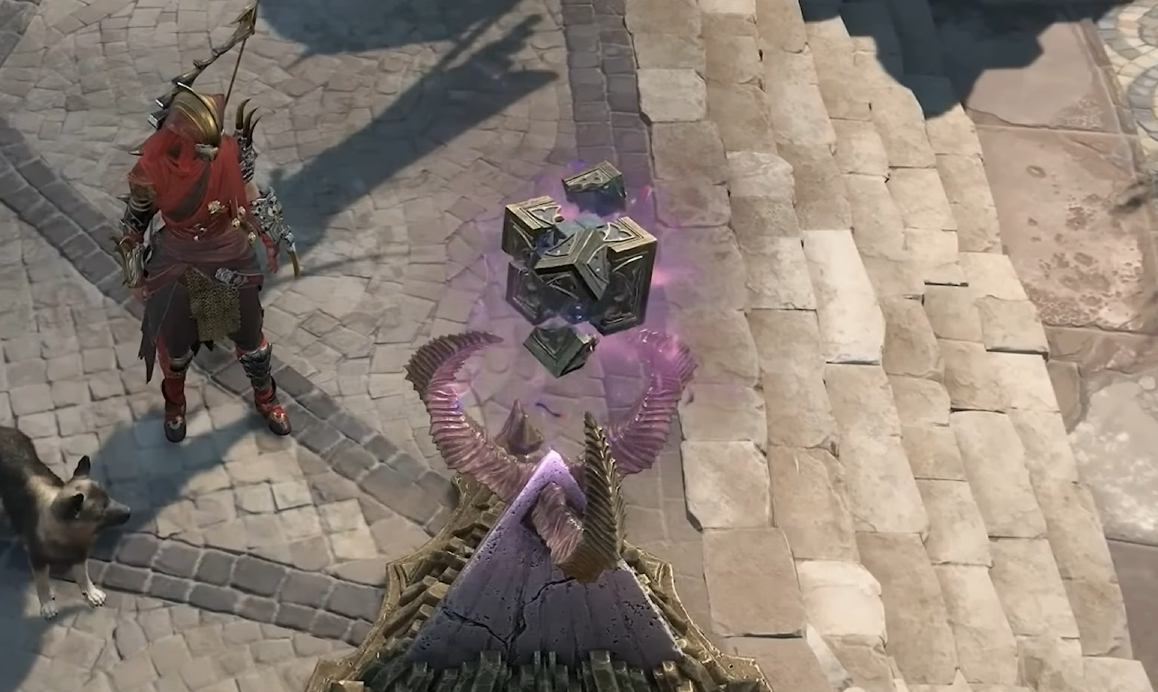
The Horadric Cube in Diablo 4 is a Lord of Hatred crafting system built around gear modification, item transmutation, Rune crafting, Charms, Seals, and Transfigure Item upgrades. The Cube can turn weak drops into useful gear, recycle duplicate items, create new crafting routes, and add one last dangerous push to finished equipment. It is powerful, expensive, and very capable of making a good item unfixable if used at the wrong time.
For the full guide list, use the Diablo 4 guides hub.
Jump To
- What The Horadric Cube Is
- How To Unlock The Horadric Cube
- How The Horadric Cube Works
- Transfigure Items Explained
- Best Time To Transfigure Items
- Tuning Prisms And Unmodifiable Items
- Amulet Transfiguration
- Gear Modification Recipes
- Item Transmutation Recipes
- Rune Crafting Recipes
- Horadric Cube Materials
- Best Ways To Use The Cube
- Quick Answers
What The Horadric Cube Is In Diablo 4
The Horadric Cube is an endgame crafting system in Diablo 4 that lets players modify gear, transmute items, upgrade item quality, craft Runes, create Charms and Seals, and use Transfigure Item for high risk final upgrades.
The Cube is basically Diablo 4’s new item lab. A weapon, armor piece, jewelry item, Rune, Talisman item, or crafting material goes in, then the selected recipe decides what comes out. Some recipes are simple conversion tools. Others change affixes, create Legendary or Unique items, reroll Unique powers, or push an item into Transfiguration.
The important part is that the Horadric Cube is not just another vendor menu. It changes how gear progression works because bad drops, duplicate items, and unfinished bases can still have value. A Rare item can become a Legendary. A Common item can become a Unique of the same type if the slot has an available Unique pool. Duplicate Uniques can be recycled for another version. A nearly finished item can be Transfigured for one last upgrade attempt.
That last part is the dangerous one. Transfigure Item is the recipe most players will care about because it can add powerful random changes, but it can also make the item Unmodifiable. The Cube gives more control than pure loot drops, but it still expects a little respect. Or at least a backup item.
How To Unlock The Horadric Cube
The Horadric Cube is connected to Lord of Hatred progression and becomes available through the expansion’s endgame crafting path.
The exact unlock path should be followed in game as Lord of Hatred content opens the system. The key point for progression is that the Cube becomes valuable once the character can actually earn the materials needed for its recipes. Having the Cube before the right materials does not suddenly fix every item in the stash. It mostly creates a new place to stare at missing requirements.
Several important Cube materials are connected to endgame reward sources, including Elite monsters, Cube Spoils in War Plans, Cache Rewards from The Tree of Whispers, and boss related systems. That means the Horadric Cube becomes stronger as the character pushes deeper into endgame routes instead of staying as a one time campaign unlock.
War Plans are especially important because Cube Spoils are one of the listed sources for several Primordial Dust materials. The Diablo 4 War Plans guide covers how that endgame route system works, which makes it useful when farming Cube materials starts becoming part of the gear plan.
How The Horadric Cube Works
The Horadric Cube works by combining an item with the required crafting materials, then applying the selected recipe to modify, transmute, upgrade, reroll, or craft something new.
The system has 3 main recipe groups. Gear Modification changes the actual item, usually through affixes, quality upgrades, Unique power values, or Transfigure Item. Item Transmutation turns items into other items, including Legendary items, Unique items, Charms, and upgraded materials. Rune Crafting creates specific named Runes through Cube recipes.
The clean way to use the Cube is to decide what problem the item has before spending materials. If the item needs another Affix, Add Affix is the obvious route. If a Unique has a weak power value, Unique Power Reroll is the route. If the item is already built and only needs a final push, Transfigure Item becomes the scary shiny button.
Trying to use the Cube without a goal turns it into a slot machine with better branding. The system is strongest when it is used to solve a specific gear problem, not when every item gets thrown into recipes because the menu is new and the stash is full.
| Cube System | What It Does | Best Use |
|---|---|---|
| Gear Modification | Changes affixes, item quality, Unique power values, or Transfiguration outcomes. | Improving gear that already has a useful base. |
| Item Transmutation | Turns items into new items, upgrades rarity, recycles Uniques, and creates Charms. | Using duplicate or unwanted loot for another useful result. |
| Rune Crafting | Crafts specific Ritual Runes and Invocation Runes. | Targeting named Runes for build setup. |
Transfigure Items Explained In Diablo 4
Transfigure Item is a Horadric Cube recipe that grants a random powerful modification to an item, with a very high chance to make that item Unmodifiable afterward.
Transfigure Item is best understood as a final crafting step. It is not the first thing to do to a good drop. The recipe can create a strong outcome, but the Unmodifiable risk means the item may no longer be open to future changes. That makes timing the recipe more important than the recipe itself.
Transfiguration is connected to the same general idea as Sanctification, but it is a more controlled and toned down version. The normal Transfigure Item outcome pool can still be random and powerful, but it does not carry the same general legendary or mythic power ceiling that Sanctification had. That lower ceiling is the tradeoff for making the system part of Diablo 4’s longer endgame item ecosystem.
Standard Transfigure Item has the highest gambling feel. It can add a strong result, alter the item in a useful way, or lock the item from further work. There is also a very low chance that standard Transfiguration does not make the item Unmodifiable, which can allow another attempt. That should be treated as a lucky outcome, not the plan. Planning around rare mercy from a crafting system is how stashes become haunted.
Best Time To Transfigure Items
The best time to Transfigure Items is after the gear already has its most important affixes, upgrades, and build role finished.
Transfigure Item should usually come late in the crafting path. The item should already be useful before it goes into the Cube for Transfiguration. If an item still needs basic cleanup, better affixes, or a different crafting route, Transfiguration can lock the item before the real work is done.
Good Transfigure targets include backup gear, strong but imperfect items, replaceable early endgame pieces, and nearly finished items where one lucky outcome would create a major upgrade. Those are the safest categories because a bad outcome does not break the entire build plan.
Bad Transfigure targets include the only copy of a key item, an item that still needs affix work, or a perfect base that has not gone through its other crafting steps. If the item still needs another recipe, do that first. Transfiguration is the final bite, not the appetizer.
| Item Situation | Transfigure Decision |
|---|---|
| Finished item with good affixes | Worth considering as a final upgrade attempt. |
| Backup version of an important item | Good target because a bad lock does less damage. |
| Item still missing a core affix | Fix the affix problem first. |
| Only copy of a build defining item | Avoid standard Transfiguration unless the risk is acceptable. |
| Amulet using Kullean Tuning Prism | Special case because it can chase a random bonus Legendary Aspect. |
Tuning Prisms And Unmodifiable Items
Tuning Prisms narrow the possible outcomes of Transfiguration, which lets the Horadric Cube reduce some risk while also changing the reward ceiling.
The key tradeoff is simple. Safer Transfiguration usually means less upside. A Tuning Prism can remove dangerous outcomes, but it can also remove some of the most rewarding possibilities. That makes Prism choice part of the item decision, not just a material cost.
Entropic Tuning Prism is the safer version of Transfiguration. It removes the riskiest outcomes and the strongest outcomes, which makes the result more stable. This is the better route for gear that is already good and does not need a wild gamble. The cost is that the item cannot hit the highest possible Transfigure results.
Standard Transfiguration is better for items that can afford risk. If the item is a backup, an early endgame upgrade, or something that would be replaced soon anyway, the higher reward pool has more appeal. If the item is a serious build piece, Entropic Tuning Prism is the cleaner play because it avoids the worst outcome range.
Unmodifiable is the status that makes this decision matter. Once an item becomes Unmodifiable, the player should treat it as finished. That is fine when the item was ready to be finished. It is painful when the item still needed work and the Cube decided the project was done.
Amulet Transfiguration And Kullean Tuning Prism
Amulet Transfiguration is the special Horadric Cube version of Transfigure Item because Kullean Tuning Prism can add a random Legendary Aspect to an Amulet, and that process is repeatable.
This is the most important Transfiguration exception. Standard Transfigure Item is mainly a final gamble for gear. Amulet Transfiguration has a separate value because it can add a bonus Legendary Aspect to the Amulet. That gives the Amulet slot a much higher build ceiling than normal gear slots.
The special Amulet version can be used on Amulets across item rarities, including Legendary, Unique, and Mythic items, based on the described system. It also does not carry the same Unmodifiable problem as standard Transfiguration. That means the Amulet can be rolled again until the desired bonus Legendary Aspect appears.
This makes Amulets one of the most important Cube targets in Season 13. A good Amulet already carries strong build value, and the extra Legendary Aspect chase adds another layer on top. For builds hunting a specific Unique Amulet, the Diablo 4 Night Terror guide is a useful related path because the Amulet slot is directly connected to this Cube power spike.
The practical rule is simple. Normal gear should be Transfigured carefully and usually late. Amulets with Kullean Tuning Prism deserve separate planning because the repeatable bonus Aspect chase can become one of the biggest endgame crafting goals.
Horadric Cube Gear Modification Recipes
Gear Modification recipes are the Horadric Cube options that directly change weapons, armor, and jewelry through affix work, Transfiguration, and Unique power rerolls.
These are the recipes most likely to improve a build quickly. They are also the recipes most likely to punish sloppy crafting. Add Affix and Focused Reroll are easier to understand because they work toward cleaner item shaping. Chaotic Reroll, Remove Affix, and Transfigure Item need more caution because the wrong result can move the item away from the build’s goal.
| Recipe | What It Does | Best Use |
|---|---|---|
| Add Affix | Adds an additional Affix to an item, which can then help upgrade its quality. | Building up a useful item before bigger upgrades. |
| Chaotic Reroll | Changes a random Affix to one from another Category. | Risky affix changes when the current item needs a major fix. |
| Focused Reroll | Changes an Affix to one from the same Category. | More controlled affix correction. |
| Remove Affix | Removes a random Affix from an item. | Making space for better crafting when the risk is understood. |
| Transfigure Item | Grants a random modification with a high chance to make the item Unmodifiable. | Final upgrade attempts on finished or replaceable gear. |
| Unique Power Reroll | Randomizes the value of the Unique Power on an Ancestral Unique item. | Fixing a good Ancestral Unique with a weak power value. |
Unique Power Reroll is one of the cleanest recipe ideas because the problem is obvious. If the Unique item is useful but the Unique Power value is bad, the Cube gives a way to chase a better version without pretending the whole item is worthless.
That makes boss farming and Unique chasing more important to the Cube loop. The Diablo 4 Season 13 boss loot table helps with that side of the system because the best Cube target starts with knowing which Uniques are worth farming.
Horadric Cube Item Transmutation Recipes
Item Transmutation recipes turn existing items into new items, which gives extra value to duplicate gear, unwanted Uniques, Common bases, Rare bases, Charms, and certain upgrade materials.
This side of the Cube is less about one perfect item and more about turning excess loot into another chance. That is important because Diablo 4 throws a lot of items at the player, and not all of them deserve to become vendor trash immediately. Some of them deserve to become a different problem first.
| Recipe | What It Does | Best Use |
|---|---|---|
| Craft Unique Charm | Breaks down or transmutes an Ancestral Unique into a Unique Charm. | Turning unused Unique gear into Talisman value. |
| 3 To 1 Transmutation | Transmutes 3 of the same equipment, Talisman, or Rune items into a random new item of that type. | Using duplicate items for another roll. |
| Recycle Uniques | Transmutes 3 of the same Unique equipment items or Charms into a new version of that Unique. | Chasing a better version of a Unique the build already wants. |
| Upgrade To Unique | Transmutes a Common equipment item into a random Unique of the same type. | Converting the right Common base into a Unique chance. |
| Upgrade To Legendary | Transmutes a Rare equipment item into a Legendary with a random Legendary power. | Turning a useful Rare base into a Legendary item. |
| Reroll Set Charm | Transmutes a Set Charm into a different Charm from the same Set. | Fixing Set Charm gaps through Cube crafting. |
| Amalgamation | Transmutes several of the same item to upgrade it. | Upgrading certain consumables, socketables, and dungeon keys. |
Upgrade To Unique has an important limit. It only works when the character’s class has a Unique, class specific or general, available for that slot. A Common item in a dead slot will not magically create a Unique that does not exist in the pool. The Cube is powerful, but it has not fully lost its mind.
Recycle Uniques is especially useful when farming the same boss or item pool repeatedly. A bad version of a useful Unique does not always need to be the end of the drop. Three copies can become another version, which keeps the farming loop connected to the crafting loop.
For class specific Unique planning, targeted guides still matter because the Cube is only as useful as the items feeding it. The Diablo 4 Litany of Sable guide is a good example of when a specific Unique’s drop location and best use can shape the broader Cube plan.
Horadric Cube Rune Crafting Recipes
Rune Crafting recipes let the Horadric Cube create specific Ritual Runes and Invocation Runes instead of relying only on random drops.
This is one of the cleaner parts of the Cube because the goal is direct. A build needs a named Rune, the Cube has a recipe for that Rune, and the player can work toward the material requirement. It is less dramatic than Transfigure Item, but it is also less likely to turn a good item into a locked personal tragedy.
| Rune Type | Recipe | Crafted Rune |
|---|---|---|
| Ritual Rune | Ritual Rune: Bac | Bac |
| Ritual Rune | Ritual Rune: Igni | Igni |
| Ritual Rune | Ritual Rune: Tam | Tam |
| Ritual Rune | Ritual Rune: Yul | Yul |
| Invocation Rune | Invocation Rune: Eom | Eom |
| Invocation Rune | Invocation Rune: Jah | Jah |
| Invocation Rune | Invocation Rune: Ohm | Ohm |
| Invocation Rune | Invocation Rune: Vex | Vex |
| Invocation Rune | Invocation Rune: Yom | Yom |
Rune Crafting should be used when the build has a clear target. If a Rune is part of the planned setup, the Cube can become part of that route instead of leaving everything to drops. This is one of the reasons the Horadric Cube is not only a gear gambling system. It also gives specific crafting paths for build pieces that would otherwise be stuck behind random loot.
Horadric Cube Materials And What They Do
Horadric Cube materials are split into Tuning Prisms, Primordial Dust, Horadric Resin, and Boss Trophies, with each material type supporting a different recipe group.
Tuning Prisms affect Transfiguration outcomes. Primordial Dust powers Transmutations and gear modification recipes. Horadric Resin is used for Charms and Seals. Boss Trophies are used to transmute items found in a Boss Hoard.
| Material | Use | Known Sources Or Notes |
|---|---|---|
| Tuning Prism | Narrows possible Transfiguration outcomes. | Used with Transfigure Item recipes. |
| Raw Primordial Dust | Used for most Transmutations. | Frequently found from Elite monsters. Rarely found from Cube Spoils in War Plans and Cache Rewards from The Tree of Whispers. |
| Coarse Primordial Dust | Used for Transmutations that add affixes. | Collected from Cube Spoils in War Plans, Cache Rewards from The Tree of Whispers, and Elite monsters. |
| Refined Primordial Dust | Used for Transmutations that change or remove affixes. | Collected from Cube Spoils in War Plans, Cache Rewards from The Tree of Whispers, and Elite monsters. |
| Pure Primordial Dust | Used for Transmutations that create Legendary items. | Collected from Cube Spoils in War Plans, Cache Rewards from The Tree of Whispers, and Elite monsters. |
| Volatile Primordial Dust | Used to Transfigure Items. | Collected from Cube Spoils in War Plans, Cache Rewards from The Tree of Whispers, and Elite monsters. |
| Enhanced Primordial Dust | Used for Transmutations that create Unique items. | Collected from Cube Spoils in War Plans, Cache Rewards from The Tree of Whispers, and Elite monsters. |
| Attuned Primordial Dust | Used for rerolling the value of a Unique item's power. | Collected from Cube Spoils in War Plans, Cache Rewards from The Tree of Whispers, and Elite monsters. |
| Resonant Primordial Dust | Used to upgrade a random affix into a Greater Affix. | Collected from Cube Spoils in War Plans, Cache Rewards from The Tree of Whispers, and Elite monsters. |
| Horadric Resin | Used to craft Charms and Seals. | Connected to Talisman item crafting. |
| Boss Trophies | Used to transmute items found in a Boss Hoard. | Connected to boss reward systems. |
Volatile Primordial Dust is the main material to watch for Transfigure Item because it is specifically used to Transfigure Items. Attuned Primordial Dust is important for Ancestral Unique Power Reroll. Enhanced Primordial Dust supports Unique creation. Resonant Primordial Dust sits at the high end because it is connected to upgrading a random affix into a Greater Affix.
Boss Trophies make boss farming part of the Cube economy. That gives boss routes extra value beyond the drop itself, especially when Boss Hoard items enter the transmutation loop. For players building around that side of Season 13, the Diablo 4 Astaroth boss fight guide is a useful related page for boss prep and route planning.
Best Ways To Use The Horadric Cube
The best way to use the Horadric Cube is to handle basic item fixes first, use transmutation recipes to recycle extra loot, and save Transfigure Item for finished or replaceable gear.
The Cube works best when recipes are used in the right order. Start by checking whether the item is worth building around. If it has a strong base, use Affix tools and rarity upgrades before considering Transfiguration. If it is a duplicate Unique, look at Recycle Uniques or Unique Power Reroll. If it is a Common base in the right slot, Upgrade To Unique can be useful. If it is a Rare item with real potential, Upgrade To Legendary can make sense.
Transfigure Item should come after those decisions. It is the final gamble, not the main crafting plan. A good item should be shaped first, then Transfigured only when the possible gain is worth the lock risk.
Amulets are the special exception because Kullean Tuning Prism changes the value of the slot. A repeatable roll for a random bonus Legendary Aspect makes Amulet Transfiguration one of the biggest long term Cube goals. That does not mean every Amulet is worth chasing forever, but a strong Amulet base can become much more valuable because of that extra Aspect layer.
| Goal | Best Cube Use |
|---|---|
| Fixing a weak affix setup | Add Affix, Focused Reroll, Chaotic Reroll, or Remove Affix. |
| Improving a good Unique | Unique Power Reroll or Recycle Uniques. |
| Creating a Legendary item | Upgrade To Legendary on a Rare item. |
| Creating a Unique item | Upgrade To Unique on a Common item of the correct type. |
| Improving duplicate loot | 3 To 1 Transmutation or Recycle Uniques. |
| Finishing a strong item | Transfigure Item, preferably after the item is already built. |
| Chasing an Amulet power spike | Amulet Transfiguration with Kullean Tuning Prism. |
The main mistake is spending rare Cube materials just because the recipe is available. Diablo 4’s endgame has enough ways to burn materials without helping the build. The Cube should answer a clear question. Does this item need an Affix? Does this Unique need a better power value? Does this Amulet deserve a bonus Legendary Aspect chase? Does this item belong in Transfiguration, or is it still half built?
When the answer is clear, the Cube is one of the strongest gear tools in Season 13. When the answer is vague, it becomes a very ornate trash compactor.
Diablo 4 Horadric Cube Quick Answers
| Question | Answer |
|---|---|
| What is the Horadric Cube in Diablo 4? | The Horadric Cube is a Lord of Hatred crafting system for modifying gear, transmuting items, crafting Runes, creating Charms, and using Transfigure Item. |
| What does Transfigure Item do? | Transfigure Item grants a random powerful modification to an item and has a very high chance to make the item Unmodifiable. |
| What does Unmodifiable mean? | Unmodifiable means the item should be treated as locked from further changes. |
| Should Transfigure Item be used early? | No. Transfigure Item is best used late, after the item is already built or easy to replace. |
| What material is used to Transfigure Items? | Volatile Primordial Dust is used to Transfigure Items. |
| What do Tuning Prisms do? | Tuning Prisms narrow Transfiguration outcomes and help control the risk and reward range. |
| What does Kullean Tuning Prism do? | Kullean Tuning Prism is used with Amulet Transfiguration to add a random Legendary Aspect to an Amulet, and the process is repeatable. |
| Can the Cube create Unique items? | Yes. Upgrade To Unique can turn a Common equipment item into a random Unique of the same type if that slot has an available Unique pool for the class. |
| Can the Cube reroll Unique powers? | Yes. Unique Power Reroll randomizes the value of the Unique Power on an Ancestral Unique item. |
| What are the main Horadric Cube material types? | The main material types are Tuning Prisms, Primordial Dust, Horadric Resin, and Boss Trophies. |
Final Blurb
The Horadric Cube gives Diablo 4 Season 13 a much deeper crafting loop because it turns extra drops, unfinished gear, duplicate Uniques, Runes, Charms, Seals, and endgame materials into real progression choices. The best Cube use starts with a clear item problem, then picks the recipe that solves it without wasting rare materials.
Transfigure Item is the risky centerpiece. It can push gear higher, but it belongs near the end of the crafting path because Unmodifiable items are hard stops. Build the item first, fix the important problems, use safer recipes when the goal is clear, and save Transfiguration for gear that is ready for one last roll. The Cube can make great items better, but it is not a therapist for bad crafting decisions.