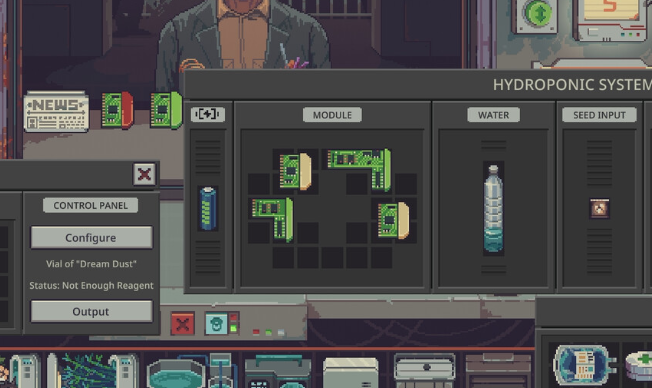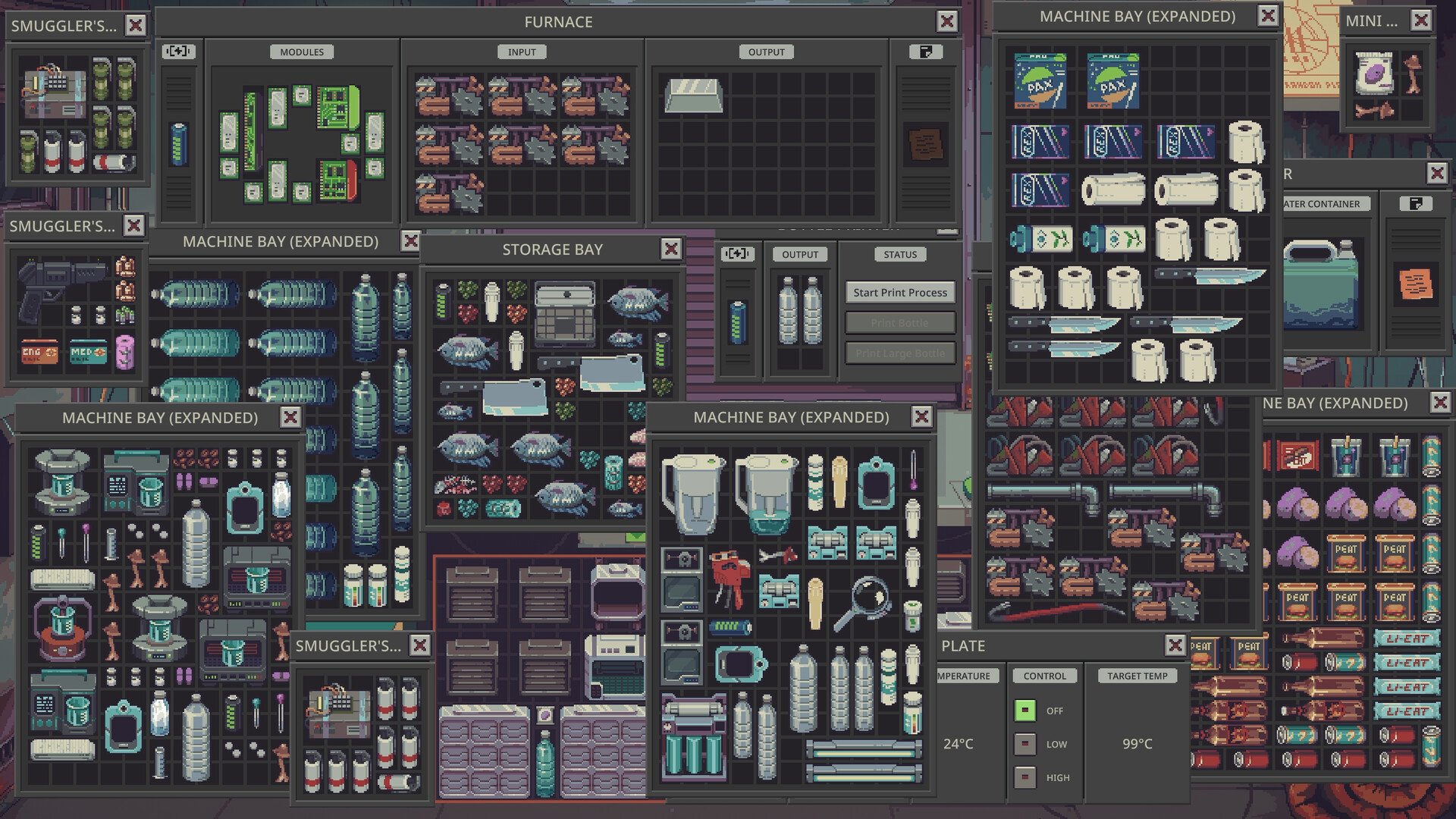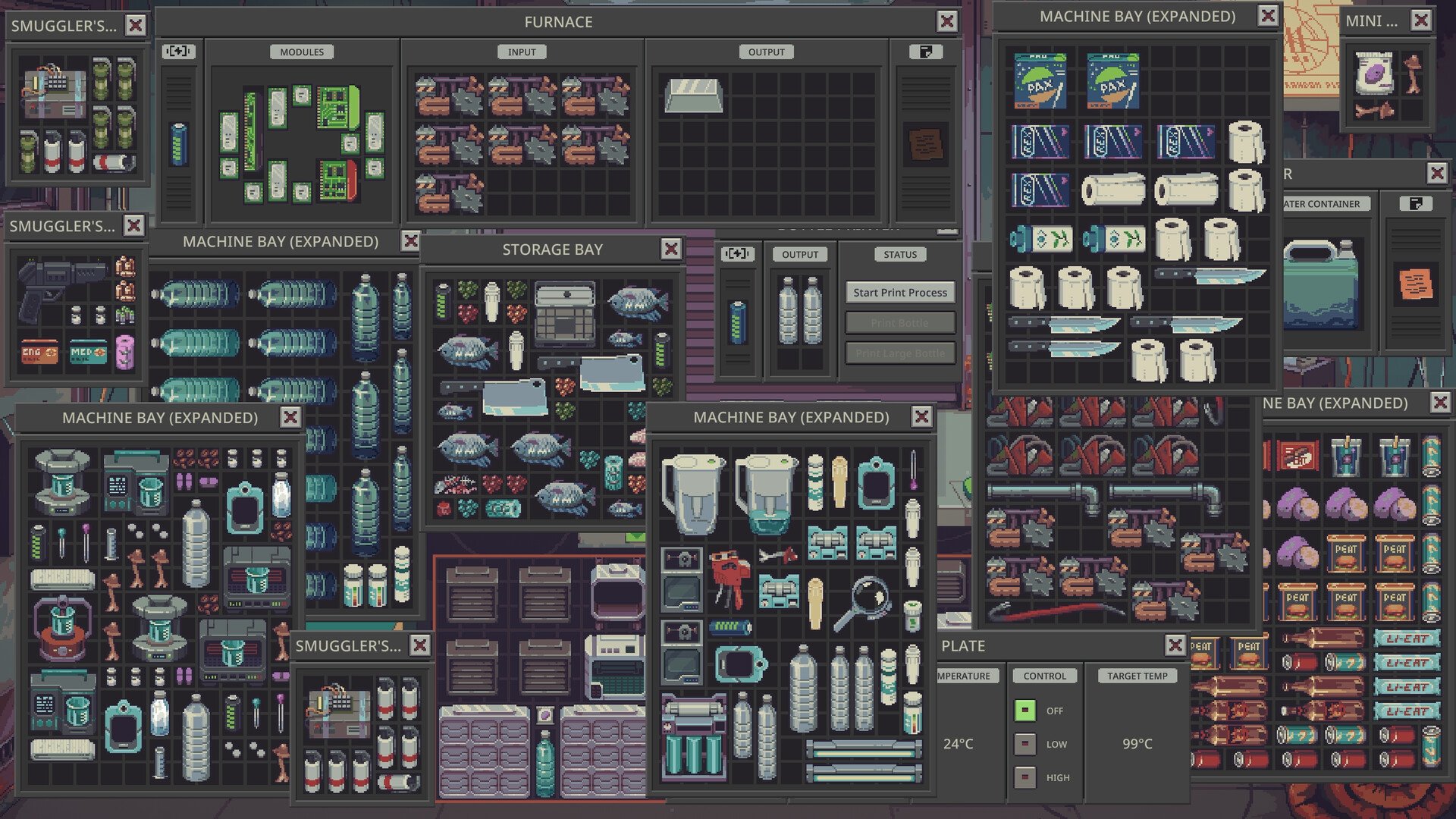
Chemistry in Probably Stolen is about controlling what happens inside a mixture, not simply combining ingredients. Temperature, contamination, and concentration determine whether you produce a valuable chemical or waste your materials. This guide covers the equipment, recipes, and steps needed to make your first successful products.
Jump To Section:
How Chemistry Works
Chemistry Recipes and Temperatures
How to Make Dream Dust
How to Make Caffeine Pills
All Chemistry Products and Values
Why Your Chemistry Isn't Working
How Chemistry Works in Probably Stolen
Chemistry lets you turn ingredients such as mushrooms and coffee beans into processed products, including pills, vials, and injectors.
Most beginner recipes involve turning a solid ingredient into a liquid mixture, triggering a chemical reaction through heat, concentrating the result, and packaging it for sale.
The challenge is that every ingredient behaves differently. Some require alcohol, others react only at specific temperatures, and several chemicals can break down if you heat them too much.
Chemistry Machines and What They Do
| Equipment | Purpose |
|---|---|
| Blender | Processes solid ingredients into liquid mixtures, such as Dream Cap Mush or Coffee Bean Mush. |
| Heating Plate | Controls the temperature needed to trigger chemical reactions. |
| Evaporator | Removes excess liquid from a mixture overnight. |
| Chem Finisher | Packages the prepared chemical into its finished product. |
| Composition Spectrometer | Displays the ingredients, chemical composition, and contaminants inside a container. |
Where to Buy Chemistry Equipment
The Chemist specialization provides access to chemical supplies through the Retired Chemist trader, who appears on Tuesdays.
If you started with another specialization, you'll need the Retired Chemist upgrade before you can trade chemical supplies.
The trader offers chemistry machines, glassware, chemical ingredients, and equipment modules.
Some useful purchases include:
- Common Chemical Supplies: 50 Credits.
- Restricted Chemical Supplies: 100 Credits.
- Composition Spectrometer: 400 Credits.
- Chemical Equipment Module: 250 Credits.
If you're deciding whether to specialize in Chemistry from the beginning, our Probably Stolen Best Perks Guide covers other starting advantages worth considering.
Why the Chem Scanner Is So Important
The Composition Spectrometer, also called the Chem Scanner, is one of the most useful tools for improving your products.
Instead of guessing whether a reaction worked, you can inspect the contents of your container and see which chemicals are present.
I recommend checking your mixture at three points:
- After blending, to measure how much usable ingredient you produced.
- During heating, to confirm that the intended chemical is forming.
- After evaporation, to see whether unwanted liquid is still diluting the product.
This helps you identify the stage where something went wrong without repeating the entire process blindly.
Probably Stolen Chemistry Recipes and Temperatures
Temperature is one of the biggest differences between chemistry recipes. Heating a mixture to the wrong range can prevent a reaction or destroy an ingredient you've already produced.
These are the important reaction conditions to know:
| Chemical | Ingredients | Temperature |
|---|---|---|
| Dream Cap Extract | Dream Cap Mush and Alcohol | 40°C or higher, but keep below 60°C. |
| Nightmare Extract | Nightmare Cap Mush and Alcohol | 40°C or higher, avoiding excessive heat. |
| Caffeine | Coffee Bean Mush and Alcohol | 50°C or higher. |
| Caffeine (Water-Based) | Coffee Bean Mush and Water | 80°C or higher, with lower extraction efficiency. |
| Nomore | Dream Cap Extract, Reducing Agent, and Lipobond Agent | 45°C to 55°C, with no more than 10% Alcohol. |
| Phanta | N-Methylol Base, Stabilizing Agent, and Reducing Agent | 110°C to below 130°C. |
For Phanta, the N-Methylol Base must exceed the Stabilizing Agent. The reaction also requires a Reducing Agent.
For Dream Cap Extract, a useful target is approximately 40°C to 49°C. The extract begins forming at 40°C, while remaining Dream Cap Mush can start turning into Plant Matter at 50°C. The extract itself breaks down at 60°C.
This makes careful temperature control especially important when working with Dream Caps.
Important Temperatures to Remember
Some temperatures affect the mixture even when they aren't directly responsible for producing your intended chemical.
- 26°C: Normal room temperature.
- 55°C: Lipobond Agent begins boiling off.
- 60°C: Dream Cap Extract breaks down.
- 70°C: Microbial contamination begins dying from heat.
- 78.37°C: Alcohol reaches its boiling point.
- 100°C: Water reaches its boiling point.
- 130°C: Phanta begins breaking down.
Remember that chemicals can react differently depending on what else is inside the container. Reaching a temperature isn't always sufficient if the required ingredients or proportions are missing.
How to Make Dream Dust in Probably Stolen
Dream Dust is a useful introductory recipe because it teaches you how extraction, temperature control, and concentration work together.
The finished product requires Dream Cap Extract, which you'll produce by processing Dream Caps with Alcohol.
Step 1: Blend the Dream Caps
Place your Dream Caps into the Blender and attach a suitable container.
Run the machine to produce Dream Cap Mush, then check the amount inside the container with your Chem Scanner.
You'll need this measurement because the extraction depends on how much mush is present.
Step 2: Add Alcohol and Prepare the Mixture
The Dream Cap extraction recipe uses approximately five parts Alcohol for each part of Dream Cap Mush.
For example, if your scanner shows 20 mL of Dream Cap Mush, a 5:1 mixture would use approximately 100 mL of Alcohol.
Use graduated cylinders or droppers when measuring liquids. These make it easier to control the mixture than pouring directly from a bottle.
You may also find unwanted Protein in the blended contents. Small, measured additions of Acid can help remove it, but inspect the composition between additions to avoid leaving excessive Acid in the mixture.
Step 3: Extract at a Controlled Temperature
Move the container onto the Heating Plate and begin warming it.
Dream Cap Extract forms at 40°C or higher, but excessive heat is dangerous. I'd aim for the lower end of the reaction range and monitor the Chem Scanner as the mush converts.
Avoid reaching 60°C, since that temperature destroys Dream Cap Extract.
Once the reaction has produced the intended extract, turn off the Heating Plate rather than leaving the container to continue heating unnecessarily.
Step 4: Concentrate and Package the Extract
If your mixture contains removable physical contamination, you can use a suitable filter and Water Pitcher before concentrating it.
Next, place the container into a powered Evaporator and leave it overnight.
The Evaporator removes excess Water and Alcohol, reducing the total liquid volume while leaving a more concentrated product.
On the following day, transfer the prepared container to the Chem Finisher, select Dream Dust, and use the output function to package the available extract.
A standard Vial of Dream Dust requires 2 mL of Dream Cap Extract and has a listed base value of 18 Credits.
How to Make Caffeine Pills in Probably Stolen
Caffeine Pills are another good beginner product, but they require a different approach to temperature and contamination.
The main ingredient is Coffee Bean Mush, produced by blending coffee beans.
Step 1: Prepare Coffee Bean Mush
Place Coffee Beans into the Blender and process them into a container.
Use your Chem Scanner to measure the Coffee Bean Mush and identify any unwanted materials.
Coffee mixtures can contain Fat and Oils, which are worth addressing before finalizing the product.
Step 2: Add Solvent and Remove Unwanted Materials
Alcohol can be used to extract Caffeine at a lower temperature than a Water-based process.
Add your solvent in measured quantities and monitor the mixture with the Chem Scanner. Check the reaction as you adjust the quantities rather than assuming every batch has the same starting composition.
If Fat and Oils are present, Lipobond Agent can help separate them from the mixture.
Any remaining Protein can also be addressed through carefully measured treatment with Acid.
Step 3: Heat the Coffee Mixture
Caffeine can form from Coffee Bean Mush and Alcohol at 50°C or above. A Water-based alternative requires approximately 80°C and has a much lower maximum extraction percentage.
Because Alcohol boils at 78.37°C, I'd favor controlled heating when using an Alcohol-based mixture rather than simply increasing the temperature as high as possible.
Check your scanner to confirm that Caffeine is forming before moving on.
Step 4: Finish the Caffeine Pills
Once the intended chemical has formed, remove suitable physical contamination with a filter if necessary.
Then place the mixture into the powered Evaporator and allow it to concentrate overnight.
On the following day, use the Chem Finisher and select Caffeine Pills.
Each Caffeine Pill requires 5 mL of Caffeine and has a listed base value of 10 Credits.
I'd use Caffeine Pills to learn the process before investing heavily in more complicated recipes. Their requirements are relatively straightforward, making it easier to identify mistakes during production.
All Chemistry Products and Values in Probably Stolen
Chemistry offers several products with different ingredient requirements and base values.
The following table shows the known finished products and how much active chemical each one requires.
| Product | Required Active Ingredient | Base Value |
|---|---|---|
| Nomore Injector | 4 mL Nomore | 50 Credits |
| Vial of Nightmare Dust | 4 mL Nightmare Extract | 36 Credits |
| Zyanide Pill | 0.6 mL Zyanide | 33 Credits |
| Vial of Dream Dust | 2 mL Dream Cap Extract | 18 Credits |
| Birth Control Pill | 0.1 mL Contraceptive Hormones | 15 Credits |
| Phanta Pill | 0.5 mL Phanta | 12 Credits |
| Caffeine Pill | 5 mL Caffeine | 10 Credits |
Which Chemistry Product Should You Make First?
Nomore Injectors have the highest listed base value per finished item, but that doesn't automatically make them the best beginner product.
They require several chemicals and more precise reaction conditions, while Caffeine Pills and Dream Dust use comparatively accessible starting ingredients.
I'd begin with whichever of those two products you can make consistently, then expand into more complicated recipes after you've obtained reliable measuring tools and a Chem Scanner.
Product quality matters as well. The Lab Pure grade provides a 135% value bonus, so producing a cleaner product can be more valuable than simply maximizing the number of low-grade items you package.
Why Isn't My Chemistry Working in Probably Stolen?
If your mixture isn't turning into the expected product, the most useful approach is to identify what the Chem Scanner shows before changing anything else.
| Problem | What to Check |
|---|---|
| No extract is forming | Check ingredient proportions and whether the mixture has reached the reaction temperature. |
| Dream Cap Extract disappears | Check whether the mixture reached 60°C, where the extract breaks down. |
| Mixture contains unwanted materials | Inspect the composition and use an appropriate treatment or filter for the remaining contamination. |
| Evaporator doesn't reduce liquid | Confirm that the machine has power and that an overnight cycle has passed. |
| Chem Finisher produces fewer items than expected | Check how much active ingredient is present and whether excess liquid is diluting the mixture. |
| Finished product has low purity | Inspect unwanted chemicals, leftover solvent, and contamination introduced during processing. |
Don't Confuse the Evaporator With a Water-Producing Machine
The Evaporator removes liquid. It doesn't create water, and it doesn't automatically convert an incorrect mixture into the intended chemical.
If your mixture never produced Dream Cap Extract or Caffeine during heating, evaporation won't fix the missing reaction.
Its job is to remove excess liquids after the desired chemistry has already occurred.
For actual water treatment rather than chemical extraction, see our Probably Stolen Water Purification Guide.
Keep Chemistry and Water Filtering Equipment Separate
One mistake worth avoiding is using the same Water Pitcher for chemical mixtures and drinking-water purification.
After filtering a chemical mixture, residue may remain behind and contaminate the next liquid poured through the equipment.
If you're running both businesses, I'd keep separate pitchers for chemistry and water treatment whenever possible.
That makes contamination easier to manage and reduces the risk of introducing unwanted chemicals into a batch that was otherwise ready to sell.
Focus on Repeatable Recipes Before Perfect Purity
Early chemistry equipment and limited funds can make extremely high-grade products difficult to produce consistently.
Rather than spending every Credit trying to perfect one expensive batch, I'd first establish a repeatable method for making Dream Dust or Caffeine Pills.
Once you understand how your ingredients react, you can use the Chem Scanner to identify unnecessary contaminants, refine your measuring process, and improve product concentration.
The most useful chemistry habit in Probably Stolen is checking what actually happened after each stage. If you know which chemical formed, what impurities remain, and whether the temperature is safe, you can correct problems before they ruin an entire batch.