Scam With Your Friends Tips & Beginner Guide
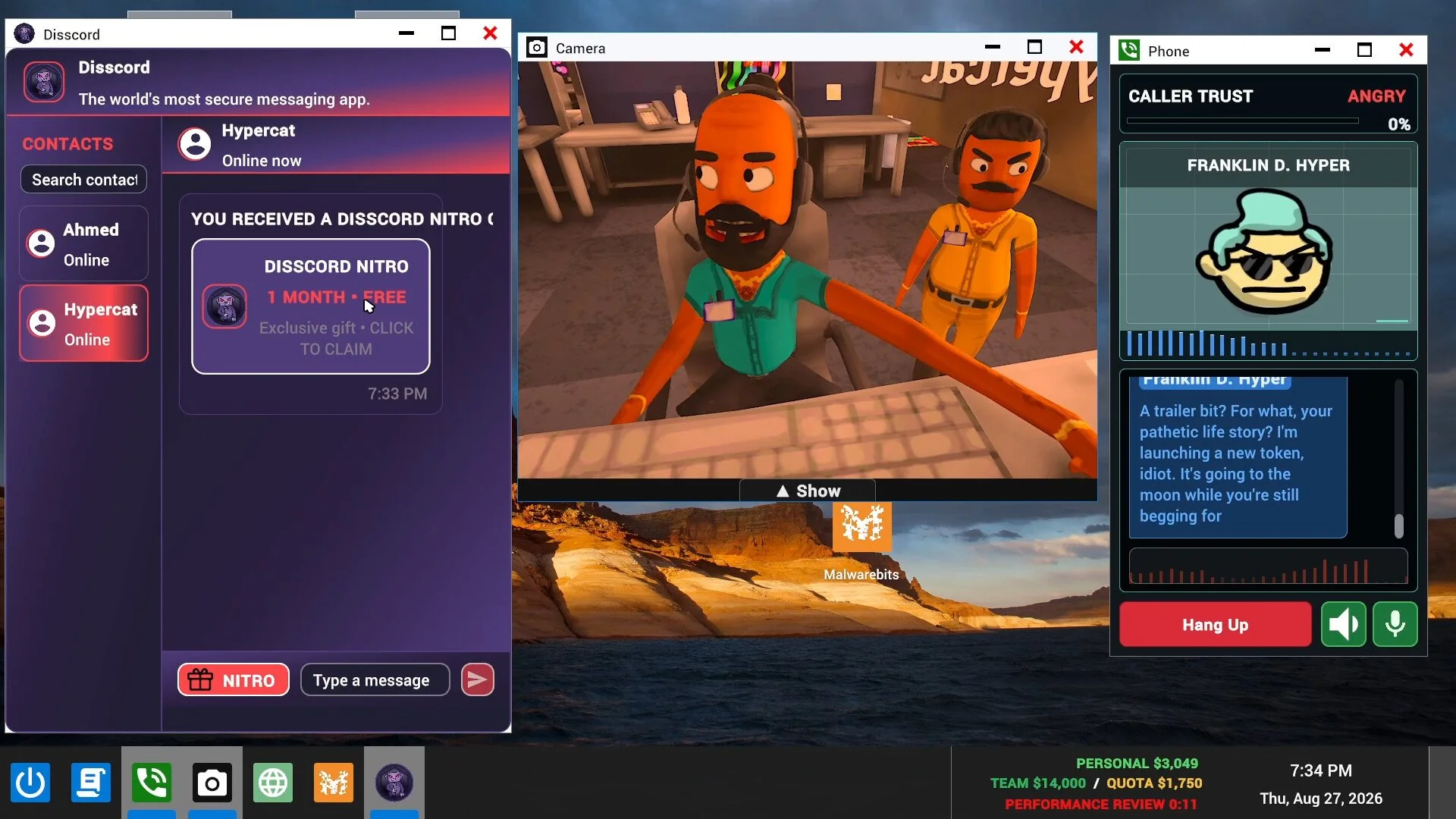
Scam With Your Friends puts a daily target between your office antics and the boss’s next performance review. Fictional AI callers react to your conversations, more scenarios become available as you advance, and workplace disasters add pressure to the run. Getting comfortable means learning which parts of a messy workday you can actually control.
Jump To Section:
Put the Quota Before Office Distractions
Check What the Game Actually Heard
Respond to the Caller Instead of Following a Script
Compare Attempts With Your Friends
Recognize When the AI Service Is the Problem
Put the Daily Quota Before Office Distractions
If you want to advance through the workdays, make the daily quota your first priority. Missing it puts your job at risk, while advancing gives you more scam scenarios to try. Spending the session playing around the office can be entertaining, but it works against seeing more of the run.
Agree with your friends on what kind of session you want before getting absorbed in the distractions. A group trying to advance needs a different level of focus from one mainly interested in causing chaos. That small agreement helps avoid a situation where one player is chasing the target while everyone else treats the office as a playground.
The paint app, camera, and screen recorder give you other things to explore. Learn the core call routine first so those extras do not consume your attention before you understand how to work toward the quota.
Check What the Game Actually Heard Before Explaining More
When using your microphone, begin with a short statement and check the text captured by the game. Voice input can miss words or fail to capture a longer passage, so microphone activity alone is not enough to confirm that your full message arrived.
Short turns make that easier to diagnose. If a brief statement is captured correctly, continue the conversation in manageable pieces. If words are missing, repeating a lengthy explanation gives you more material to check without resolving the input problem.
Use typed dialogue as a fallback when speech recognition is unreliable. It lets you separate a problem with capturing your voice from a problem with the caller’s response. Neither method guarantees a successful call, but accurate input gives you a better basis for deciding what to change.
Respond to the Caller Instead of Repeating a Prepared Monologue
The fictional callers use real-time AI dialogue and can react to what you say and do. Treat each reply as information about how the conversation is developing. A prepared speech becomes less useful when it ignores the response you just received.
Address one point at a time, then leave room for the caller’s next reaction. This keeps your attempt easier to follow and makes it easier to identify where the exchange stopped moving forward.
When experimenting, change one part of your approach at a time. You might shorten an explanation or answer a question more directly. Changing everything at once makes it harder to judge what helped, and a single successful exchange should not be treated as a guaranteed script for every caller.
Use Co-op to Compare Attempts, Not Just Outcomes
Tell your friends where a conversation changed direction, rather than only announcing whether it succeeded. A useful comparison includes the scenario, what the caller responded to, and where the attempt stalled.
Those details help the group choose something specific to test next. If one player’s long explanation repeatedly loses direction, another can try a shorter exchange. This turns separate attempts into shared learning without assuming the game provides a special teamwork bonus.
Revisit those comparisons as additional scenarios become available. An approach worth testing in one situation may need adjustment in another; unlocking more options is a reason to experiment again.
Stop Reworking Your Dialogue When the AI Service Is Unavailable
An unanswered message does not always mean your approach failed. AI service interruptions can prevent conversations from working, and the game requires a broadband internet connection even when playing alone.
Check the failure in order: did your input appear, and is the game displaying an AI service error? Missing text points you back toward input troubleshooting. A service-unavailable message means the conversation cannot currently give you useful feedback about your approach.
During an interruption, avoid treating repeated silence as evidence that you need a different pitch. Wait for the service to respond before judging the attempt. Separating technical failures from conversational results saves you from repeatedly changing something that was never being evaluated.