WoW Forever Arms Warrior Build Guide
Arms Warrior in WoW Forever is at its best when you stop thinking about each enemy as a separate fight. Charge gives you the opening Rage, Rend rewards getting your bleed started early, Overpower turns an enemy dodge into an opportunity, and Sweeping Strikes eventually gives you a reason to deliberately take on more than one target at a time. The build itself is straightforward; the bigger difference comes from knowing when to spend Rage now and when keeping it makes the next fight faster.
Jump To Section:
Best Arms Warrior Build
How Arms Warrior Combat Works
Level 30 Talent Build
How to Use Sweeping Strikes
When to Use Execute
Best Stats and Gear
Race Choice
Dungeons and Group Play
Level 60 Build
Useful Arms Macro
Go 21/0/0 at Level 30 and Build Toward Sweeping Strikes
The level 30 Arms Warrior setup is 21/0/0, putting every available point into Arms so you can reach Sweeping Strikes. That's the talent I'd consider the real turning point for the build because it changes more than your damage number: it changes which fights are worth taking.
Before Sweeping Strikes, most solo combat naturally revolves around one target at a time. Once you have it, fighting two or more enemies becomes much more attractive whenever you're healthy enough to survive the extra pressure.
Level 30 build — 21/0/0
Weapon style — Two-handed
Core opener — Charge into Rend
Reactive ability — Overpower after an enemy dodge
Single-target spender — Heroic Strike
Multi-target spender — Cleave
Build payoff — Sweeping Strikes
That's also why I wouldn't judge Arms purely by how quickly it kills one quest mob. The spec becomes more interesting when you're able to turn one Rage bar, one cooldown, and one series of heavy weapon swings into progress against several enemies.
Arms Warrior Combat Has a Beginning, Middle, and Exit
Instead of memorizing a long rotation, I find Arms easier to play by dividing every fight into three decisions.
Start the fight — Charge when possible and apply Rend early.
Control the fight — Use Spearing Strike, Heroic Strike, and Overpower as appropriate.
Leave the fight — Decide whether the enemy needs another Rage spender or whether that Rage is better carried into your next target.
Charge is valuable because it solves two problems at once: it closes the gap and gives you Rage to begin attacking immediately. Rend makes the most sense near the start of combat so the bleed has time to work, while Spearing Strike and Heroic Strike give you ways to convert Rage into direct damage.
Overpower is different because you don't simply decide to use it whenever you want. An enemy dodge creates the opportunity, so pay attention to it and capitalize when Overpower becomes available.
Battle Shout should remain active throughout this process. Demoralizing Shout and Thunder Clap aren't abilities I'd mindlessly press into every solo enemy, but they become much more interesting when several targets are hitting you and reducing incoming damage helps you survive the pull.
The Level 30 Arms Tree Has Three Jobs to Accomplish
Rather than reading the 21 points as one long talent order, I'd divide the tree into the jobs those talents are doing for the build.
Build the foundation:
3/3 Rend
5/5 Deflection
2/2 Charge
Reward good attack opportunities:
2/2 Improved Overpower
5/5 Impale
Complete the two-handed build:
1/1 Spearing Strike
2/2 Two-Handed Weapon Specialization
1/1 Sweeping Strikes
Rend supports the bleed you're already opening fights with, while Charge improves an ability you use constantly to move between enemies. Improved Overpower then makes dodge-triggered opportunities more rewarding.
Impale pushes your critical damage higher, Two-Handed Weapon Specialization reinforces the weapon style the build is centered around, and Spearing Strike gives you another attack to work into combat before you finally reach Sweeping Strikes.
Deflection isn't the exciting reason to play Arms, but those points still give you additional avoidance while moving through the tree. That's useful on a melee character that regularly expects to be standing directly in front of whatever it's trying to kill.
Sweeping Strikes Should Change the Size of Pulls You Take
The most useful way to think about Sweeping Strikes isn't simply “this is my AoE cooldown.” It's a signal that some multi-target fights are now worth taking instead of avoiding.
If you're fighting one enemy, Heroic Strike remains a natural place for excess Rage. Add more enemies and Cleave becomes increasingly attractive because you're turning that same resource toward multiple targets. Add Sweeping Strikes on top and the value of your heavy two-handed attacks spreads even farther across the pack.
One target — Focus your Rage on efficient single-target damage.
Several targets — Shift more Rage toward Cleave.
Sweeping Strikes available — Consider whether you can safely turn several nearby enemies into one larger damage window.
That last part matters. Sweeping Strikes giving you more damage doesn't make you invincible. Pulling three enemies instead of one also means three enemies can be hitting you. The good pull is the one where your extra damage kills the group quickly enough to justify the extra pressure you're taking.
This is one of the biggest places I'd change how I level once the talent is unlocked. Instead of automatically tagging whatever enemy happens to be closest, I'd start looking at whether nearby targets can be grouped into a pull that actually gets value from Sweeping Strikes.
Execute Is Powerful, but It Can Make the Next Fight Worse
Execute creates one of the more interesting Rage decisions on Warrior because finishing the current enemy can consume the resource you would otherwise carry forward.
If something needs to die immediately, that's an easy decision. Use it. The more interesting case is a target that's already about to die while another enemy is waiting nearby.
My rule is to ask what the remaining Rage will accomplish. If Execute meaningfully shortens a dangerous fight, spending the Rage makes sense. If the enemy would have died to another weapon swing anyway, keeping that Rage can give you a much stronger start on whatever you're fighting next.
That's why I wouldn't measure leveling efficiency by the kill time of one enemy. Saving one second on the current target isn't necessarily an improvement if it makes the next target take several seconds longer.
Strength and Agility Are the Arms Warrior Stats to Look For
Strength and Agility are the main offensive stats to watch on Arms Warrior gear, while Stamina is useful when it comes attached to an otherwise worthwhile upgrade.
Strength gives 2 Attack Power per point and also provides Block Value. For Arms, the important part is the Attack Power because your entire playstyle is built around getting more value from heavy physical attacks.
Agility provides Critical Strike Chance along with Armor and Dodge. The critical chance pairs naturally with Impale, while the defensive benefits aren't wasted on a melee character that will regularly take hits while questing.
Look for — Strength and Agility.
Useful extra — Stamina.
Don't do — Pass on an obvious overall upgrade solely because its stat distribution isn't perfect.
I'd use stat priorities as a comparison tool rather than an absolute law. If two pieces are close, Strength and Agility help break the tie. If one item is simply a much stronger upgrade overall, the perfect-looking stat names on the weaker piece shouldn't trap you.
Use Racials to Break a Tie, Not Choose Your Character for You
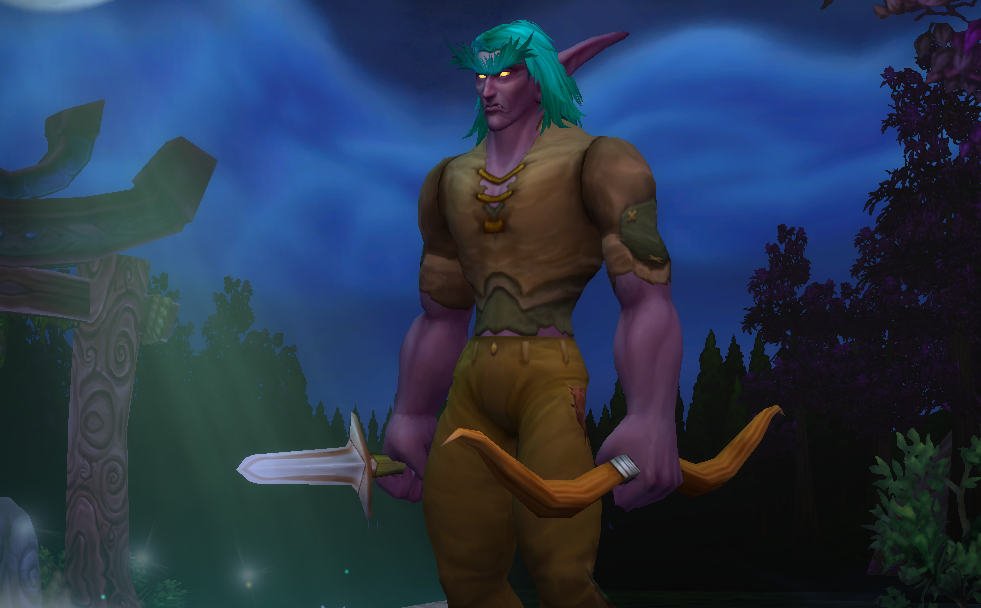
Arms Warrior can be played by Human, Night Elf, Dwarf, Gnome, or Skyborn on Alliance and Orc, Tauren, Troll, Undead, or Skyborn on Horde.
I wouldn't turn that into a single mandatory race recommendation. The useful racial changes depending on what you care about.
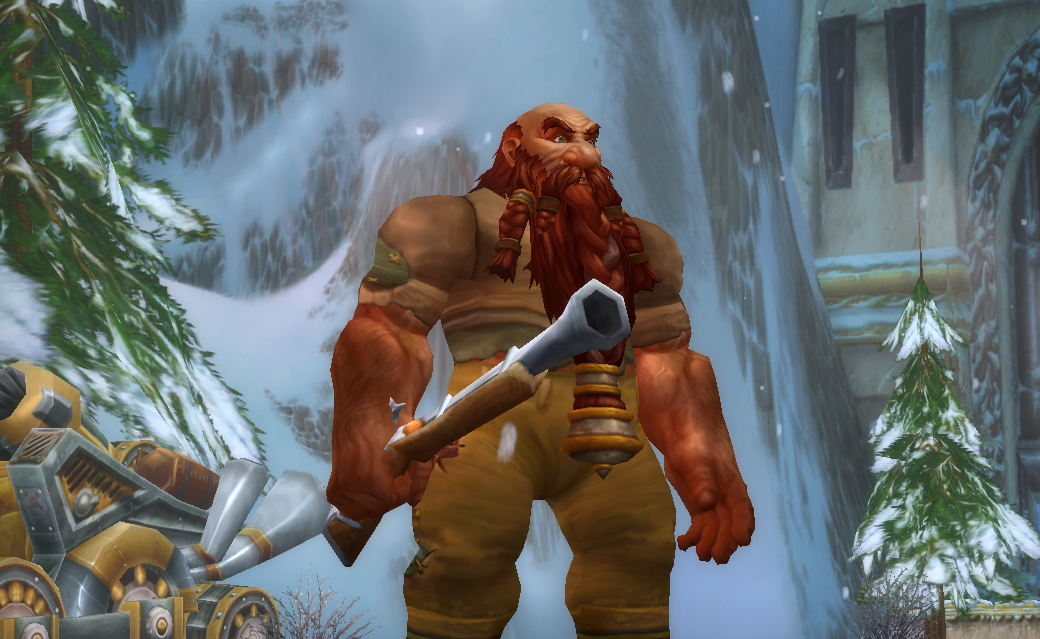
Want mace synergy — Dwarf gets 1% Critical Strike Chance with maces.
Expect lots of PvP — Human has anti-stealth and stun removal tools, while Gnome can answer Roots and Snares.
Want attack speed and recovery — Troll has Berserking plus regeneration tools.
Planning around axes — Orc gets 1% Critical Strike Chance with axes and also has Blood Fury.
Dwarf also brings Stone Form and additional damage against beasts, while Orc adds Hardiness and Shatter Curse to its toolkit. Troll gets increased damage against beasts alongside its regeneration effects.
Those are meaningful differences, but they're differences I'd use after deciding which races I actually want to play. A Forever character can stay with you for a long time, and one racial bonus isn't enough reason for me to pick a character I don't enjoy looking at or playing.
Dungeon Packs Give Arms More Chances to Play to Its Strengths
Groups naturally create situations where Arms gets more value from Cleave and Sweeping Strikes because the tank is already gathering multiple enemies into one place.
That means you don't have to manufacture multi-target pulls yourself. You can focus on entering the pack with Rage, switching from Heroic Strike toward Cleave when the number of targets justifies it, and using Sweeping Strikes when there are enough enemies around for the cooldown to matter.
Demoralizing Shout and Thunder Clap also give you something useful to contribute beyond personal damage. On threatening packs, reducing the damage enemies deal can help the tank and healer more than pretending every global has to appear on your damage meter.
Arms Warrior can also step into a tanking role in easier lower-level dungeon content when a group needs it. You won't have the same protection as a shield-focused Warrior, so expect to take more damage, but your damage and multi-target threat can still make it workable in the right content.
I would treat that as emergency flexibility rather than the reason to build Arms. If you actually want to spend most of your time tanking, Protection gives you a toolkit designed around doing exactly that.
The Level 60 Build No Longer Needs to Stay Pure Arms
The level 30 build goes all the way to 21 points in Arms because reaching Sweeping Strikes is the immediate goal. With a full level 60 talent budget, the build can instead spread into a 17/34/7 setup.
Those two distributions make more sense when you view them as builds for different stages rather than expecting the level 30 tree to simply continue downward forever.
At 30, every point outside Arms delays the talent you're trying to reach. At 60, there are enough points available to combine useful talents from several parts of the Warrior tree while still creating a complete DPS setup.
That's the distinction I'd remember rather than treating 21/0/0 as something your character is supposed to preserve permanently.
A Simple Startattack Macro Helps Your Two-Handed Swings Begin Immediately
Normal weapon attacks are a meaningful part of playing Warrior, so I like attaching /startattack to an ability I'm already using regularly rather than relying on a separate input to begin swinging.
#showtooltip Heroic Strike
/cast Heroic Strike
/startattack
Arms ultimately becomes much easier when you stop thinking of it as a fixed sequence of buttons. Charge establishes the fight, Rend rewards an early application, Overpower rewards paying attention, Cleave replaces single-target spending when the pull gets larger, and Sweeping Strikes changes when taking that larger pull is actually worth it.
The final skill is knowing when the fight is already won. Once an enemy is effectively dead, the Rage on your bar may be worth more against the next target than another ability against this one. For more class, leveling, dungeon, race, and system coverage, the WoW Forever guides hub has our growing collection of Forever guides.
Looking for a different Warrior build?
WoW Forever Fury Warrior Build Guide
WoW Forever Protection Warrior Build Guide