WoW Forever Marksmanship Hunter Build Guide
Marksmanship Hunter in WoW Forever is strongest when you treat distance as part of your damage rather than just where you happen to stand. Your pet buys you time, Hawk Eye gives you more room to work with, and your ranged attacks are at their best when enemies spend as much of the fight as possible trying to reach you instead of actually hitting you. The level 30 build goes entirely into Marksmanship, but good play matters just as much as the talent tree: start fights from far away, let your pet establish the enemy, and manage your Mana so you aren't forced to drink after every few pulls.
Jump To Section:
Best Marksmanship Build
Why Range Matters So Much
Level 30 Talent Build
How to Use Your Pet
Marksmanship Rotation
How to Manage Mana
Dungeons and Multi-Target
Best Stats
Race Considerations
The Best Level 30 Marksmanship Hunter Build Is 0/21/0
Marksmanship puts all 21 available points into its own tree at level 30. The goal is to improve the part of Hunter you're already leaning into: ranged weapon damage, critical hits, range, and stronger scaling from the stats on your gear.
The build picks up Hawk Eye, Lethal Attacks, Careful Aim, Rapid Killing, Trueshot Aura, and Mortal Shots on the way down the tree. Rather than thinking of those as six unrelated upgrades, I'd group them into three jobs: keep enemies farther away, make your ranged attacks hit harder, and improve the momentum you carry from one kill into the next.
Level 30 build — 0/21/0
Primary damage style — Ranged weapon attacks
Main defensive advantage — Distance plus pet threat
Key scaling stats — Agility and Intellect
Multi-target tool — Multi-Shot
Group damage cooldown — Rapid Fire
Range Is Basically Part of Marksmanship's Defensive Kit
Hawk Eye is easy to look at as a quality-of-life talent, but extra range changes how much time you have before an enemy ever reaches you.
If you begin an encounter at maximum distance, your pet has more time to build threat and you have more time to fit ranged attacks into the fight before melee becomes relevant. That creates a simple advantage: every second the enemy spends traveling is a second you're dealing damage without taking any in return.
I'd make that part of the normal pull rather than something you only think about against difficult enemies. Send the pet first, start as far away as practical, and make the target cross the space you've deliberately created.
If the enemy does break away from your pet, the solution isn't necessarily to stand still and trade hits. Moving away between shots, using Concussive Shot, or using Wing Clip once an enemy is close can help recreate space and give your ranged weapon more time to work.
That's one of the biggest differences between playing Marksmanship efficiently and treating Hunter like a stationary turret. Positioning directly changes how much damage you take.
The Marksmanship Talents Build Damage in Layers
The level 30 tree makes more sense if you look at what each group of talents adds to the same ranged game plan.
Create more distance:
3/3 Hawk Eye
Improve your ranged damage:
5/5 Lethal Attacks
5/5 Careful Aim
Improve kill-to-kill momentum:
2/2 Rapid Killing
Add group and critical damage:
1/1 Trueshot Aura
5/5 Mortal Shots
Hawk Eye supports the positioning advantage the spec wants from the beginning. Lethal Attacks and Mortal Shots push the critical-hit side of Marksmanship, while Careful Aim makes Intellect more interesting than it would be on a purely physical stat sheet.
Rapid Killing is the talent I'd pay particular attention to while questing because it gives you another reason to think beyond the enemy currently in front of you. Keeping Serpent Sting involved in your combat becomes more important once you're trying to carry that damage momentum into the next target.
Trueshot Aura then gives the build another offensive benefit that matters in groups as well as solo play.
Your Pet's Main Job Is to Protect Your Shooting Time
Marksmanship isn't Beast Mastery, but that doesn't make your pet an afterthought. I think the easiest way to understand the pet on this build is as a tool that protects your ranged window.
You want the enemy fighting your pet while you're standing at range using your bow or gun. The longer that arrangement lasts, the less often you have to interrupt ranged pressure to deal with something in melee.
A Boar is particularly useful early because Charge lets it reach the enemy quickly and establish threat faster. That's valuable for Marksmanship for a very simple reason: the sooner your pet becomes the target, the sooner you can attack freely.
Send the pet before committing your own damage.
Start the fight from maximum practical range.
Let the pet establish threat while you begin shooting.
If threat breaks, create distance instead of immediately accepting a melee fight.
I'd also keep direct control of the pet rather than allowing it to run freely into whatever is nearby. That's especially important in dungeons, where one uncontrolled pet can turn a clean pull into several packs very quickly.
Marksmanship Rotation Is About Building a Clean Ranged Window
Hunter's Mark should go on the target you're actually committing to, then your pet can start the fight while you position at range and begin shooting.
Auto Shot is the backbone rather than filler. From there, Serpent Sting, Aimed Shot, and Arcane Shot give you active ways to add damage, while Multi-Shot enters the picture once several enemies are involved.
Before the pull — Mark the target and send the pet.
Opening — Begin Auto Shot from maximum range.
Early damage — Apply Serpent Sting and use your ranged shots.
Several enemies — Add Multi-Shot when the pack justifies it.
Enemy reaches you — Finish with Raptor Strike, Mongoose Bite, or create distance again.
I wouldn't think of that as a rigid five-button script. The better question is whether you're still in control of the fight. If your pet has the enemy and you're comfortably shooting, keep exploiting that ranged window. If threat breaks, solve the positioning problem first instead of pretending nothing changed.
The Fastest Kill Isn't Always the Fastest Way to Level
Marksmanship uses enough Mana that repeatedly throwing every available ability into every enemy can create a different kind of downtime: drinking.
That's why Auto Shot matters so much. It's not merely damage that happens between your “real” buttons. Letting your ranged weapon do more of the work can preserve Mana and keep you moving through several enemies without having to stop.
Intellect helps here in two ways. It increases your Mana pool, and Careful Aim also makes the stat contribute to your damage. That gives Marksmanship a stronger reason to value Intellect than a Hunter build that only cares about its basic resource benefit.
My rule would be to spend more aggressively when doing so solves a problem: a dangerous enemy, a large pull, or a dungeon pack where stopping to drink afterward isn't a big concern. Against ordinary enemies your pet already controls comfortably, there isn't much reason to burn through your entire Mana bar just to make one health bar disappear slightly faster.
Dungeons Remove One of Marksmanship's Biggest Solo Limitations
When another player is tanking, you don't have to rely entirely on your pet to preserve the space between you and the enemy. That gives Marksmanship much more freedom to focus on damage.
Keep Hunter's Mark on the important target, let the tank establish the group, then use Multi-Shot once you're comfortable that the pack isn't going to immediately turn toward you.
This is also a better environment for Rapid Fire. The ability produces a lot of threat quickly, which can be awkward when your pet is the only thing standing between you and an enemy. A dedicated tank gives you much more room to use that burst without immediately becoming the target.
Traps also give you ways to influence a pack beyond raw ranged damage. Frost Trap can slow groups and make movement easier to control, while Explosive Trap adds another source of damage against several enemies.
I wouldn't automatically use every AoE tool the instant a pull starts, though. Let the tank establish control first. More damage only helps the group if the enemies continue attacking the person who is supposed to be holding them.
Agility and Intellect Work Together on Marksmanship
Agility is the first stat I'd look for because it increases Ranged Attack Power, Attack Power, and Critical Hit Chance. Intellect follows closely because it supports your Mana while also interacting directly with Careful Aim.
Agility — Ranged Attack Power, Attack Power, and Critical Strike Chance.
Intellect — More Mana and additional value through Careful Aim.
Other stats — Useful when they come on otherwise strong upgrades.
That makes Marksmanship gearing a little more interesting than simply stacking one obvious physical stat. Agility improves the direct ranged side of the build, while Intellect helps both your damage scaling and how long you can keep using abilities before Mana becomes a problem.
Race Choice Is Mostly About Which Bonus Fits Your Play
Alliance Hunters can be Human, Night Elf, Dwarf, or Skyborn, while Horde Hunters can be Orc, Tauren, Troll, or Skyborn.
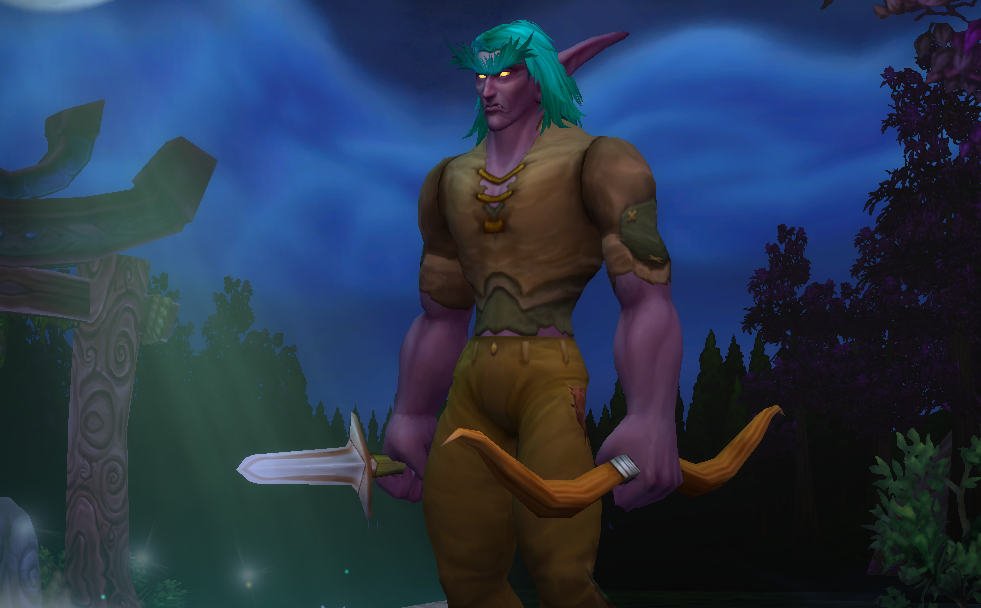
Night Elf has an especially natural Marksmanship package because Elune's Light gives 10% increased Critical Strike Chance for 15 seconds, while its passive movement and dodge bonuses also fit a ranged character that benefits from controlling space.
Troll is a strong Horde option for a different reason. Berserking provides 10% increased Attack Speed for 10 seconds, Trolls deal additional damage to beasts, and their regeneration abilities give them several ways to recover while moving through the world.
I still wouldn't let those bonuses choose the character for you. Hunter already gets enormous practical value from positioning, pet control, ranged uptime, and good Mana usage. Racials are useful advantages, but they're smaller than the difference between playing those fundamentals well and poorly.
The main thing I'd focus on with Marksmanship is protecting your ranged uptime. Start far away, make the pet absorb as much attention as possible, spend Mana when it meaningfully improves the fight, and use movement when something breaks through instead of immediately accepting melee combat. Once those habits are in place, the talent build has a much stronger foundation to work from.
For more class, leveling, dungeon, race, and system coverage, the WoW Forever guides hub has our growing collection of Forever guides.
Looking for a different Hunter build?
WoW Forever Beast Mastery Hunter Build Guide
WoW Forever Survival Hunter Build Guide