WoW Forever Beast Mastery Hunter Build Guide

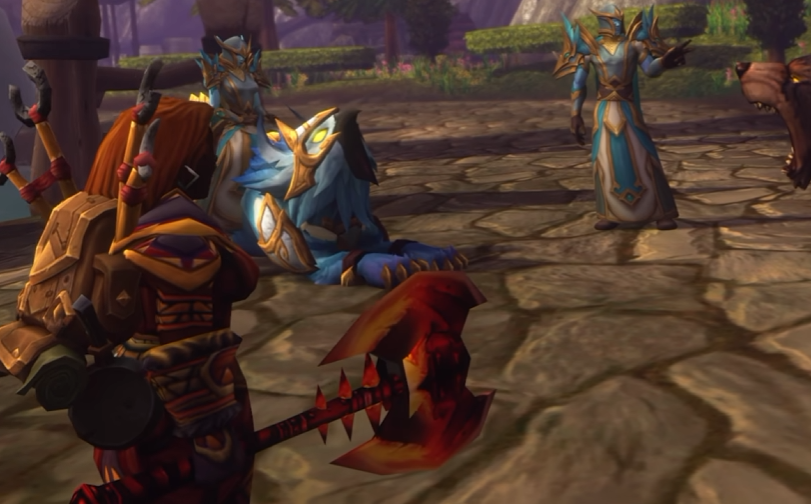
Beast Mastery Hunter in WoW Forever works best when you stop thinking of the pet as extra damage and start treating it as the thing that controls the pace of every fight. Your pet gets there first, takes the enemy's attention, and gives you room to keep shooting while Summon Hawk adds another layer of pressure on top. The result is a spec that can move from enemy to enemy with very little downtime as long as you don't outrun your own pet's threat or waste Mana trying to make every kill happen instantly.
Jump To Section:
Best Beast Mastery Build
The Pet-First Combat Loop
How Summon Hawk Works
Level 30 Talent Build
Beast Mastery Rotation
How to Avoid Pulling Threat
Mana and Leveling Downtime
Best Stats and Gear
Race Considerations
Dungeons and Group Play
The Level 30 Beast Mastery Build Goes 21/0/0
Beast Mastery puts all 21 points into its own tree at level 30. That makes sense because the entire build is trying to improve the same thing: the relationship between your ranged damage, your permanent pet, and the extra pressure provided by Summon Hawk.
The biggest difference from Marksmanship is where I would expect the character's reliability to come from. Marksmanship protects its damage with range. Beast Mastery protects its damage by making the pet better at getting to the enemy, holding attention, surviving mistakes, and contributing meaningful damage on its own.
Level 30 build — 21/0/0
Combat style — Ranged Hunter with heavy pet investment
Major new tool — Summon Hawk
Level 30 talent — Intimidation
Core advantage — Your pet creates safe ranged uptime
Main leveling goal — Keep moving without unnecessary recovery stops
That's the reason I'd recommend thinking of Beast Mastery as a tempo build rather than simply “the pet spec.” When the pet is doing its job correctly, one pull naturally feeds into the next.
Let the Pet Start the Fight Before You Start Spending Damage
The easiest way to make Beast Mastery feel worse than it should is to attack too early.
Your pet is valuable because it can take the enemy's attention while you remain at range. That only works if you actually give it enough time to establish the fight. Sending the pet and immediately unloading everything you have can defeat the entire point if the enemy turns around and runs straight toward you.
I would treat the first few seconds of every pull as a handoff.
Pet goes first — Let it reach and engage the enemy.
Threat begins building — Position yourself at range.
You begin shooting — Add Hunter's Mark and ranged pressure once the fight is established.
Pet stays in control — Keep dealing damage without giving up your ranged position.
That small delay can actually make leveling faster because you're much less likely to spend the second half of the fight dealing with an enemy in melee. The goal isn't to land the first possible shot. It's to maximize the portion of the fight where both you and your pet are dealing damage at the same time.
Summon Hawk Turns Beast Mastery Into More Than One Pet Doing the Work
Summon Hawk is the new ability that really separates Beast Mastery from the familiar version of the spec. A Hawk lasts 18 seconds, the ability has a 6-second cooldown, and you can have up to two Hawks active at once.
That creates a simple rhythm: get the first Hawk active, add the second when the cooldown allows it, and try to preserve the period where both are attacking simultaneously.
I wouldn't think of the Hawks as something you casually summon whenever you remember. They're part of your sustained damage pattern. Once you have access to the talent, Beast Mastery becomes a small army rather than just you plus one companion.
There is also an opportunity-cost decision around Arcane Shot because Summon Hawk and Arcane Shot share a cooldown in the supplied material. The useful way to think about that isn't “always Hawk” or “always Arcane Shot.” If both Hawks are already active and you have room before the first needs replacing, that's the window where Arcane Shot becomes easier to fit in without immediately sacrificing Hawk uptime.
The Beast Mastery Tree Builds Toward Better Uptime, Not Just Bigger Pet Numbers
The level 30 Beast Mastery tree is easy to misread as nothing but pet damage talents. Several of the most useful picks actually improve how smoothly the entire character moves through the world.
Hunter damage support:
Deadly Aspects
Focused Fire
Movement and recovery:
Pathfinding
Improved Revive Pet
Pet pressure:
Unleashed Fury
Bestial Swiftness
Ferocity
New Beast Mastery tools:
Summon Hawk
Intimidation
Deadly Aspects works with Aspect of the Hawk, while Focused Fire pushes your own damage higher. Pathfinding doesn't directly increase your damage inside a fight, but movement speed can still improve leveling because so much of the process is simply getting from one objective or enemy to the next.
Improved Revive Pet solves a different kind of downtime. A dead pet is especially painful on Beast Mastery because you've lost both damage and the thing meant to hold enemies away from you. Getting that pet back more efficiently matters more here than it would on a build that treats the companion as optional support.
Unleashed Fury, Bestial Swiftness, and Ferocity then improve the companion side directly, while Summon Hawk adds another attacker and Intimidation gives the pet another way to establish control.
That's why I think the tree is better understood as an uptime tree. Some talents increase damage, some get your pet into position faster, and others reduce the penalty when something goes wrong.
Beast Mastery Rotation Is About Keeping Several Sources of Damage Working Together
You aren't trying to replace Auto Shot with a constant stream of active abilities. Your normal ranged attacks and pet attacks already do a large amount of the work, so the goal is to layer your other tools around them without disrupting that foundation.
Establish the fight — Send the pet first and mark the target.
Start ranged pressure — Keep Auto Shot working from range.
Add sustained damage — Use Serpent Sting where appropriate.
Maintain your extra attackers — Keep Summon Hawk working once unlocked.
Several enemies — Add Multi-Shot when the pull supports it.
Enemy reaches you — Use your melee tools or recreate distance.
The important part isn't the exact order after the opener. It's keeping all three layers contributing at the same time: your ranged weapon, your main pet, and your Hawks.
If one of those layers drops unnecessarily, the build becomes less efficient. If all of them are working together, Beast Mastery can maintain damage even while you conserve Mana.
Pulling Threat From Your Own Pet Is Usually a Sign You're Starting Too Fast
Threat management on Beast Mastery isn't just a defensive concern. It directly changes your damage pattern.
If the pet holds the enemy, you can remain at range and keep shooting. If you rip the target away, you're suddenly dealing with the Hunter dead zone, melee attacks, movement, or kiting instead of continuing your preferred ranged pattern.
That makes Intimidation especially useful because it gives your pet another way to generate a large amount of threat at level 30.
I wouldn't compensate for weak pet threat by simply accepting melee every fight. Give the pet more time before your opening burst, then use movement if something does get away.
Concussive Shot and Wing Clip can help create space when needed. The objective is to restore the situation Beast Mastery actually wants: pet in front, Hunter at range.
Beast Mastery Doesn't Need a Full Mana Bar to Keep Killing
One of Beast Mastery's biggest practical advantages is that a large part of its damage keeps happening even when Mana is low. Auto Shot doesn't stop being useful, and your pet doesn't suddenly stop attacking because your resource bar is empty.
That's why I wouldn't automatically sit down to drink every time Mana starts getting low. If your pet is healthy and capable of controlling another normal enemy, you can keep moving while your basic damage continues working and your Mana naturally recovers.
Icy Veins makes the same underlying point: Hunter retains substantial combat output through basic ranged attacks and the pet even without Mana, while prioritizing efficient Mana uses such as keeping the pet healthy and applying useful sustained damage.
My rule would be to think in terms of downtime rather than maximum ability usage. Spending every point of Mana may kill one target faster, but if it forces a long drink immediately afterward, it may not actually make the entire quest route faster.
Weapon Damage and Agility Are the Safest Beast Mastery Gear Priorities
The sources you've provided don't agree on one perfectly identical stat list, so I wouldn't pretend there is a single settled numerical priority.
What they do consistently support is that your ranged weapon and Agility matter heavily. Icy Veins places Ranged Weapon Damage at the top of its leveling priority followed by Hit, Agility, and Critical Strike, while Mobalytics emphasizes Agility first and then values Strength and Intellect behind it.
Prioritize first — Strong ranged weapon upgrades.
Core stat — Agility.
Useful secondary value — Critical Strike, Intellect, Stamina, and other strong stats depending on the item.
Don't do — Pass on a clearly better ranged weapon because another piece has prettier secondary stats.
Agility is especially useful because it improves Ranged Attack Power, Attack Power, and Critical Strike Chance. Beast Mastery also benefits from an important Forever change: pets scale with your stats, so improving the Hunter is no longer completely separate from improving the companion.
That makes weapon quality and strong overall upgrades more important to me than chasing an overly precise low-level stat formula.
There Isn't One Beast Mastery Race I'd Force Everyone to Play
Human, Night Elf, Dwarf, and Skyborn can play Hunter on Alliance, while Orc, Tauren, Troll, and Skyborn are available on Horde.
The sources you've provided actually recommend different races depending on what they're prioritizing, which is another reason I wouldn't present one mandatory answer. Mobalytics highlights Night Elf and Troll, while Icy Veins points toward Human for Alliance utility, Tauren for Horde PvP, and Orc for Horde PvE.
I'd instead look at what the racial does for the way you intend to play. Orc brings Blood Fury for offensive PvE value. Tauren provides additional health and an AoE stun. Night Elf has Elune's Light for a Critical Strike window along with movement and defensive benefits. Troll offers Berserking and additional regeneration tools.
Those bonuses can absolutely matter, but pet control, gear, uptime, and your ability to keep dealing ranged damage are going to affect normal gameplay far more often than squeezing every last percentage point out of the character creation screen.
A Real Tank Changes What Beast Mastery Can Get Away With
Solo Beast Mastery is built around letting your own pet manage the enemy. Dungeons change that relationship because another player is usually doing the tanking.
That means your pet no longer has to carry the entire defensive side of the fight, giving you more freedom to focus on maintaining Auto Shot, your Hawks, and your other ranged damage without constantly worrying about whether one big burst will turn the enemy toward you.
Multi-Shot also becomes more useful because tanks naturally gather several enemies together. I would still give the tank time to establish control before firing into the whole pack rather than assuming every pull is immediately safe to AoE.
Rapid Fire fits better into these controlled group situations as well because its large threat generation is less dangerous when a dedicated tank is already holding the enemy instead of your pet being the only thing keeping it away from you.
Traps give you another way to contribute. Frost Trap can help control movement across a group of enemies, while Explosive Trap adds additional multi-target damage when the pack is positioned for it.
The reason Beast Mastery works so well as a complete package is that none of these systems are isolated. Better pet threat protects your ranged uptime. Better uptime means more Auto Shots. Hawks add damage while the pet is already working. Conserving Mana lets you keep the chain going longer. If you play around that entire cycle rather than just looking for the highest-damage button, Beast Mastery becomes one of the easiest Hunter builds to keep moving from fight to fight.
For more class, leveling, dungeon, race, and system coverage, the WoW Forever guides hub has our growing collection of Forever guides.
Looking for a different Hunter build?
WoW Forever Survival Hunter Build Guide
WoW Forever Marksmanship Hunter Build Guide