WoW Forever Fury Warrior Build Guide
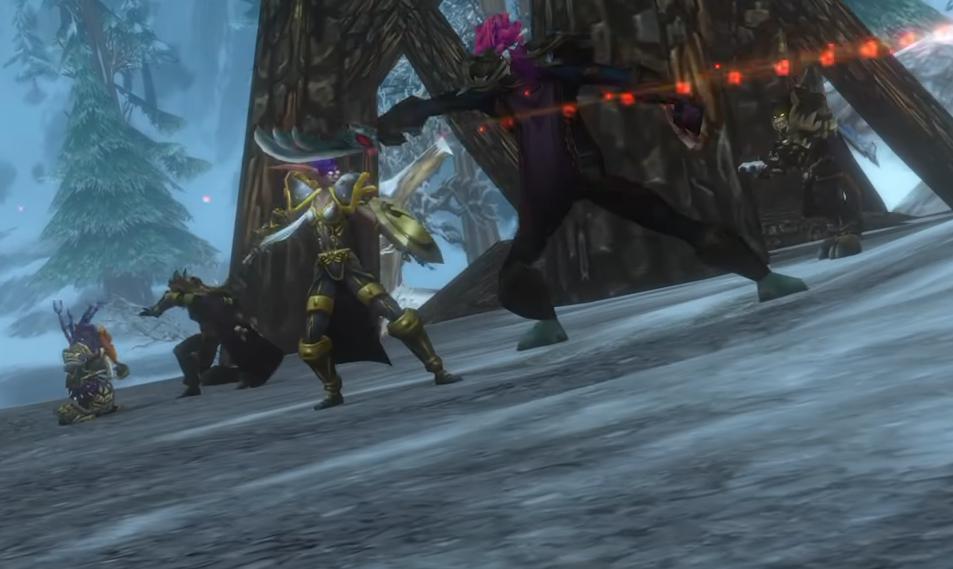
Fury Warrior in WoW Forever is really a resource-management spec disguised as a straightforward melee DPS class. You generate Rage by fighting, decide whether that Rage should become Heroic Strike or Cleave, and then choose whether finishing the current enemy faster is actually worth entering the next fight empty. The level 30 build reaches Death Wish, but the bigger decision comes earlier: whether you want to build Fury around a two-handed weapon or dual wielding.
Jump To Section:
Best Fury Warrior Build
Two-Handed vs Dual Wield
Level 30 Fury Talents
How Fury Rage Management Works
Single-Target vs Multi-Target Damage
How to Use Death Wish
When Execute Is Worth the Rage
Best Fury Warrior Stats
Race Considerations
Fury Warrior in Dungeons
The Level 30 Fury Warrior Build Is 0/21/0 for Death Wish
Fury goes 0/21/0 at level 30, committing fully to the Fury tree so Death Wish becomes available as the final point. I would use a two-handed weapon as the default version of this build, but Fury has enough flexibility that dual wielding is a legitimate alternative rather than something you have to wait until later to experiment with.
The important thing is that weapon choice changes part of the talent setup. You aren't simply equipping two different weapons on top of an otherwise identical build.
Level 30 build — 0/21/0
Default recommendation — Two-handed Fury
Alternative — Dual wield Fury
Main single-target Rage spender — Heroic Strike
Main multi-target Rage spender — Cleave
Major level 30 talent — Death Wish
If you're unsure which version to start with, I'd take the two-hander. It gives you the cleaner talent path and keeps Fury focused on large weapon swings without asking you to make additional specialization choices immediately.
Two-Handed and Dual Wield Fury Spend Their Middle Talent Points Differently
Two-handed Fury uses 5 points in Enrage. Dual wield Fury instead puts those points into Dual Wield Specialization, with an optional point in Raging Blows depending on what you're doing.
If you're regularly fighting groups, 4 points in Dual Wield Specialization and 1 point in Raging Blows can make sense because Raging Blows reduces the Rage cost of Cleave by 2. Its Whirlwind interaction isn't part of the level 30 setup, so Cleave efficiency is the immediate reason to consider it here.
If you're spending most of your time fighting isolated enemies, I'd rather keep all 5 points in Dual Wield Specialization. You're giving up a group-oriented Cleave improvement for a cleaner investment into the weapon style you're using constantly.
Two-handed Fury — 5/5 Enrage.
Dual wield, mostly solo — 5/5 Dual Wield Specialization.
Dual wield, lots of groups — 4/5 Dual Wield Specialization + 1/1 Raging Blows.
That makes weapon choice more than cosmetic. It changes where part of your talent budget goes and which situations your build is trying to improve.
Most of the Fury Tree Is Shared Before the Weapon Split
The first part of the level 30 Fury build is consistent regardless of whether you eventually use one weapon or two.
Core talents:
5/5 Cruelty
5/5 Unbridled Wrath
3/3 Improved Cleave
Flexible investment:
2/2 Boundless Rage
Weapon-specific investment:
5/5 Enrage for two-handed Fury
or Dual Wield Specialization with optional Raging Blows
Final point:
1/1 Death Wish
Cruelty supports your critical hits, while Unbridled Wrath strengthens the Rage side of the spec. Improved Cleave is particularly useful whenever you're fighting several targets because you're making a common multi-target Rage spender cheaper.
Boundless Rage increases your maximum Rage, but I wouldn't treat those two points as untouchable. Fury has other utility options available, including Piercing Howl and Blood Craze, so this is one place where I'd be comfortable adapting the build around what you're actually doing.
That's a useful distinction from the final Death Wish point. Death Wish is the destination of the level 30 tree; the flexible points on the way there don't all have to be treated as equally mandatory.
Fury Feels Better When You Manage Rage Across Several Fights
I wouldn't judge Fury by how perfectly you spend every point of Rage on the enemy currently in front of you. The better question is what your Rage bar looks like when that enemy dies.
You don't want to sit capped and waste incoming Rage, but constantly forcing yourself back to zero creates the opposite problem. Every fresh enemy then begins with you waiting for enough Rage to start using the abilities you actually want.
My approach would be to spend aggressively while doing so meaningfully shortens the fight, then become more conservative once the target is already effectively finished.
Early fight — Spend Rage to establish your damage quickly.
Middle of fight — Keep spending while you're getting meaningful value.
Enemy nearly dead — Stop dumping Rage just because an ability is available.
Next target nearby — Carry resources forward and start the next fight stronger.
I think this is the single most useful habit for Fury while leveling. You're optimizing the entire stretch of combat rather than trying to make each individual kill look perfect.
Heroic Strike and Cleave Solve Two Different Fury Problems
Your target count should change where excess Rage goes.
Against one enemy, Heroic Strike is the natural Rage spender. When you're fighting multiple targets, Cleave becomes the more relevant option because you're converting the resource into damage across more than one enemy.
Charge remains a strong way to begin fights because it closes the gap and gets the Rage engine moving. Rend should be applied early enough to benefit from its duration, while Overpower should be used whenever an enemy dodge gives you the opportunity.
Battle Shout should also stay active rather than becoming something you occasionally notice is missing. Demoralizing Shout and Thunder Clap can become worthwhile when several enemies are hitting you and reducing incoming damage lets you keep fighting without having to stop and recover as often.
The broader rule is simple: Fury doesn't need one rotation for every situation. The target count itself should change how you're spending resources.
Use Death Wish During Real Damage Windows Instead of Saving It Forever
Death Wish is the talent you're spending all 21 Fury points to reach, so holding it indefinitely defeats a large part of the reason you built this deep into the tree.
I would use it when you know you're going to get sustained value from attacking: a tougher enemy, a meaningful dungeon pack, or another fight where you're actually going to stay on targets long enough for the offensive window to matter.
You don't need to wait for some theoretical perfect encounter. Saving Death Wish through several fights because something better might appear later can easily produce less total value than simply using it regularly in good situations.
That becomes even easier in dungeons because the flow of packs gives you obvious moments where several enemies are already grouped together and you're free to stay in melee range.
Execute Is a Choice Between Ending This Fight and Starting the Next One
Execute becomes available at level 24 and gives Warrior a powerful way to finish low-health targets, but its Rage cost creates a real tradeoff.
If the enemy is dangerous and you need it dead, use Execute. That's the easy case.
The more interesting case is an enemy that's already almost gone while another target is waiting nearby. Spending your Rage can make the current health bar disappear faster while leaving you with a much weaker opening immediately afterward.
I'd ask one question: does Execute meaningfully change this fight?
If yes, spend the Rage. If the enemy was going to die to another swing anyway, keeping that resource can be more valuable than shaving a tiny amount of time off a fight you've already won.
This is where Fury's Rage management and Execute decision become the same concept. The resource only matters because you can carry its value forward.
Strength and Agility Are the Fury Warrior Stats I'd Look For
Strength and Agility are the main offensive stats to look for on Fury Warrior gear, while Stamina remains useful when it comes on an otherwise strong item.
Strength gives close to 2 Attack Power per point, making it a straightforward damage stat. Agility provides Critical Strike Chance and Armor, with the crit especially fitting a Fury build that's already investing into Cruelty.
Strength — Direct physical damage through Attack Power.
Agility — Critical Strike Chance plus Armor.
Stamina — Useful survivability when included on a good upgrade.
I wouldn't turn that into a rule where every item without perfect Strength and Agility gets ignored. While leveling, overall item quality still matters. Stat priorities are most useful when you're comparing pieces that are reasonably close.
Race Choice Can Follow Your Weapon and PvP Plans
Fury Warrior can be played by Human, Night Elf, Dwarf, Gnome, or Skyborn on Alliance and Orc, Tauren, Troll, Undead, or Skyborn on Horde.
Instead of trying to declare one mandatory race, I'd look for synergies with what you already plan to do.
Dwarf gains 1% Critical Strike Chance while using maces and also has Stone Form for additional defensive utility. Orc gets 1% Critical Strike Chance with axes, while Blood Fury adds an Attack Power increase for an offensive cooldown.
Troll offers Berserking for increased attack speed along with regeneration tools, while Human and Gnome bring particularly useful PvP utility through stun removal, stealth detection, and answers to movement impairing effects.
I'd still treat all of those as tiebreakers. Your weapon availability, build, gear, and actual play matter enough that I wouldn't pick a race I dislike purely because one racial happens to line up nicely with Fury.
Dungeon Fury Is About Converting Packed Enemies Into Efficient Rage Spending
Dungeons naturally give Fury more opportunities to use Cleave because tanks are already bringing several enemies together for you.
That makes the group environment straightforward: stay on the pack, use Cleave when the number of targets justifies it, keep Battle Shout active, and use Death Wish during pulls where you're going to get meaningful uptime from it.
Demoralizing Shout and Thunder Clap also give you ways to reduce the pressure on your group. They're not direct damage buttons, but on a dangerous pull they can make the tank easier to heal and help the group move into the next pack without stopping.
Warrior can also survive briefly pulling threat better than many fragile damage dealers, and being hit can generate additional Rage. I still wouldn't deliberately make that part of the rotation. Forcing the healer to spend extra resources fixing your threat problem can easily erase whatever extra damage you gained.
For me, the appeal of Fury is that the spec rewards thinking one fight ahead. A good pull isn't just the one where you spent every point of Rage and killed the enemy as quickly as possible. It's the one where you dealt the damage you needed, used Death Wish when it actually mattered, and still entered the next fight with enough momentum to keep going.
For more class, dungeon, leveling, race, and system coverage, the WoW Forever guides hub has our growing collection of Forever guides.
Looking for a different Warrior build?
WoW Forever Arms Warrior Build Guide
WoW Forever Protection Warrior Build Guide