Over the Hill Blast Wagon Guide
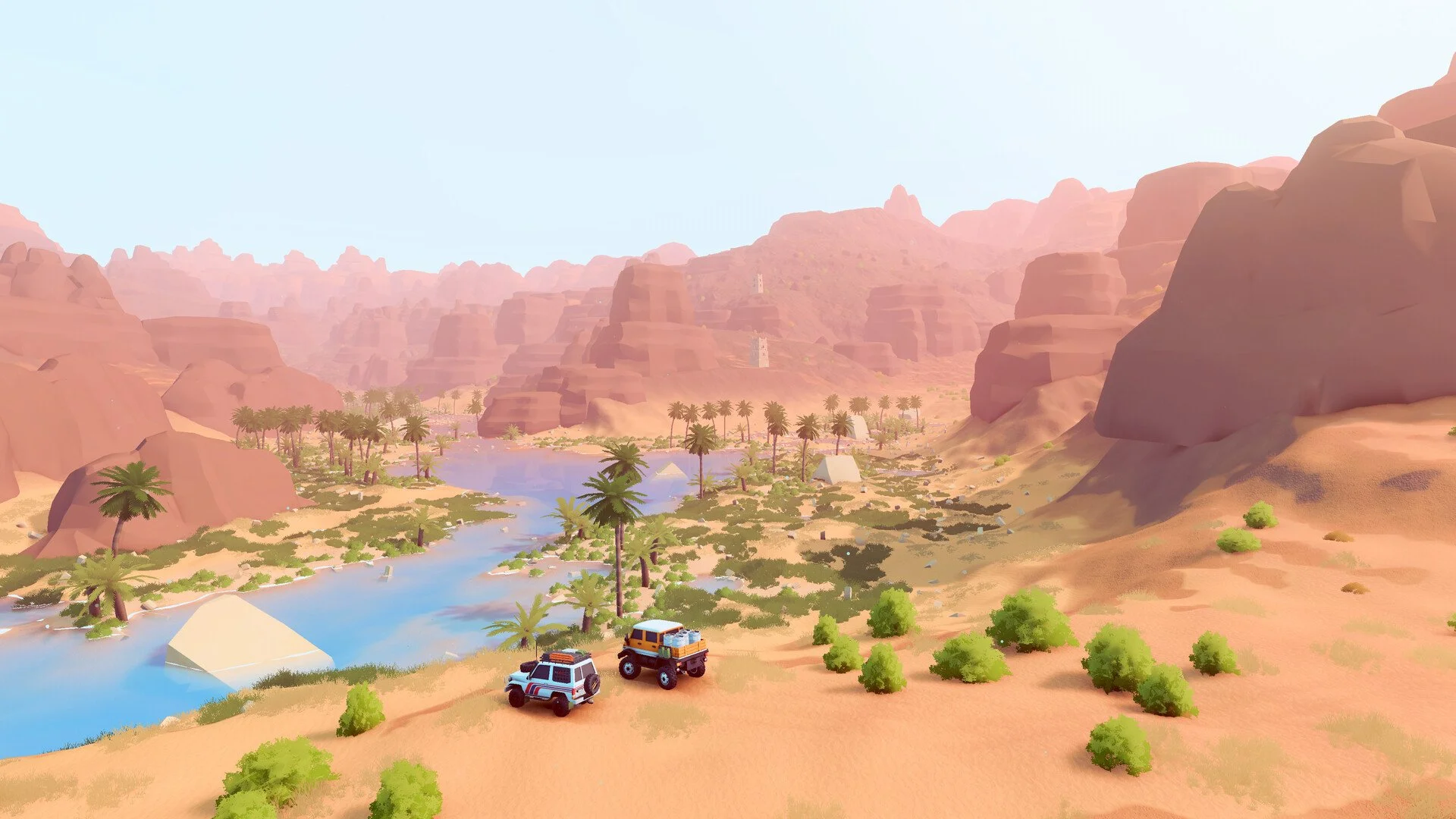
The Blast Wagon is one of Over the Hill's heavier work trucks, pairing a 2,800 kg chassis with large 0.48-meter tires, strong tire grip, and up to 207 Nm of torque. It gives up some agility compared with the game's lighter vehicles, but the combination makes it a capable choice when the route favors stability, traction, and getting over rough ground rather than threading through tight technical sections.
Jump To Section:
How Good Is the Blast Wagon?
Blast Wagon Stats Explained
Best Blast Wagon Upgrades
Where the Blast Wagon Is Best
Blast Wagon Weaknesses
Blast Wagon Customization
How Good Is the Blast Wagon in Over the Hill?
The Blast Wagon is a strong heavy off-road option for routes where grip, tire size, and stability matter more than sharp steering. At its highest engine tier it produces 207 Nm of peak torque, while its 0.48-meter wheels and 1.30 forward grip give it a useful combination for climbing uneven ground and maintaining traction when the trail gets rough.
Its biggest tradeoff is weight. At 2,800 kg, the Blast Wagon carries considerably more mass than the light and midweight vehicles, and its 28-degree maximum steering angle makes it less comfortable on routes filled with tight switchbacks or constant corrections.
That makes it a vehicle with a clear identity rather than a universal answer. It is particularly effective when the challenge is getting a heavy truck through rocks, slopes, mud, or broken terrain, while smaller vehicles remain easier to place precisely on narrow technical sections.
It also holds up well against the rest of the roster. In our Over the Hill Best Car guide, the Blast Wagon stands out as one of the better heavy alternatives even though the Mammoth and Marshal have the advantage at the very top of the heavy class.
Blast Wagon Stats Explained
The Blast Wagon weighs 2,800 kg and uses a two-speed gearbox with forward ratios of 4.7 and 3.5. Its drivetrain also gives you both an 8:1 high range and a much shorter 20:1 low range, which is where the truck becomes substantially more useful on steep or difficult terrain.
Low range matters because raw engine torque does not tell the whole story. The shorter gearing multiplies the torque reaching the wheels, making the Blast Wagon better suited to slow climbs and controlled crawling than the 207 Nm figure alone suggests.
The suspension offers 45 cm of travel, while the wheels measure 0.48 meters in radius. That tire size is one of the vehicle's more useful traits because a larger wheel can negotiate holes, ledges, and abrupt terrain changes more easily than a smaller one, even before suspension upgrades are considered.
Tire grip is also strong, with 1.30 forward grip and 1.27 cornering grip. Combined with the weight of the chassis, this gives the Blast Wagon a planted feel when there is enough room to use it, although the same mass works against it when you need quick directional changes.
Mass: 2,800 kg
Peak Torque: 207 Nm at Engine Tier 3
Forward Gears: 2
Gear Ratios: 4.7 / 3.5
Low Range: 20:1
Suspension Travel: 45 cm
Wheel Radius: 0.48 m
Forward Grip: 1.30
Cornering Grip: 1.27
Maximum Steering: 28°
Best Blast Wagon Upgrades
Tires are one of the best early upgrades for the Blast Wagon because traction is already central to what the truck does well. Tires Stage 2 costs 25 Pebbles, while Stage 3 costs another 50, and both upgrades increase tire grip.
Suspension is another strong investment. The stock truck already has useful tire size but only 45 cm of suspension travel, so increasing suspension height helps the chassis take advantage of those larger wheels when the ground becomes more uneven.
Engine upgrades are worthwhile once traction and clearance feel comfortable. Engine Stage 2 raises output from 175 Nm toward the truck's eventual 207 Nm peak torque, with Stage 2 costing 25 Pebbles and Stage 3 costing 50. More power becomes especially useful on sustained climbs and when the truck's 2,800 kg mass starts working against it.
Winch upgrades are also hard to ignore if you are using the Blast Wagon for exploration. Its size lets it muscle through plenty of terrain, but a longer winch gives you another option when its weight becomes a disadvantage. The winch can be upgraded through three additional stages costing 25, 50, and 75 Pebbles.
I would prioritize Tires, Suspension, and Engine before Protection unless you are regularly taking heavy damage. Water Resistance is similarly valuable only if your route selection regularly sends the truck through deep crossings.
Where the Blast Wagon Is Best
The Blast Wagon is at its best on routes where forward momentum matters more than maneuverability. Rocky climbs, uneven forest trails, muddy approaches, and open technical terrain all let its tire size and grip do useful work without constantly exposing the limited steering angle.
Low range should be used aggressively on difficult climbs rather than waiting until the truck is already stuck. The 20:1 low-range gearing gives you far more controlled torque delivery and makes it easier to maintain a deliberate line instead of attacking an obstacle with speed.
Its weight can also become an advantage when the terrain is rough but relatively open. The Blast Wagon tends to feel more settled than lighter vehicles when crossing broken ground, particularly once the suspension and tire upgrades begin improving what is already a capable heavy platform.
If you are still learning how to use low range, recovery equipment, and the game's other traversal systems effectively, our Over the Hill Tips and Tricks Guide covers the broader off-road mechanics.
Blast Wagon Weaknesses
The biggest limitation is maneuverability. A 28-degree maximum steering angle is not particularly generous, and the 2,800 kg chassis means mistakes take more effort to correct than they would in a small lightweight vehicle.
That makes narrow switchbacks, cramped routes, and obstacles requiring repeated steering adjustments more awkward than they need to be. The truck can often get through them, but it may take more repositioning than a smaller vehicle with a sharper steering angle.
The Blast Wagon also sits below the heaviest 3,200 kg trucks in outright engine output, so choosing it purely because it looks large does not make it the most powerful vehicle in the roster. Its value comes from the overall package of 207 Nm, good grip, useful wheel size, and manageable heavy-truck proportions.
In other words, use the Blast Wagon because the route suits what it does well, not simply because it is bigger than many of the other cars.
Blast Wagon Customization
The Blast Wagon has one of the broader customization selections available, with 178 accessories and nine liveries. The pickup bed alone supports several distinctive setups including camping gear, expedition equipment, kayaks, a canoe, skis and snowboards, surfboards, and a mountain rescue loadout.
There are also numerous practical-looking exterior options such as traction boards, an off-road jack, jerry cans, shovels, rock sliders, skid plates, bull bars, tow equipment, and spare wheels, alongside more cosmetic additions like horns, plushies, lights, antennas, and decorative plates.
Those pieces do not change the underlying reason to choose the truck, but they fit the Blast Wagon particularly well because its work-truck body gives you much more visual space to build around than many of the smaller vehicles.
If the Blast Wagon is not available in your garage yet, our Over the Hill How to Unlock New Cars guide explains how Trial Runs, vehicle rescues, and the broader car unlock system work.