Graveyard Keeper 2 Writing Desk Guide
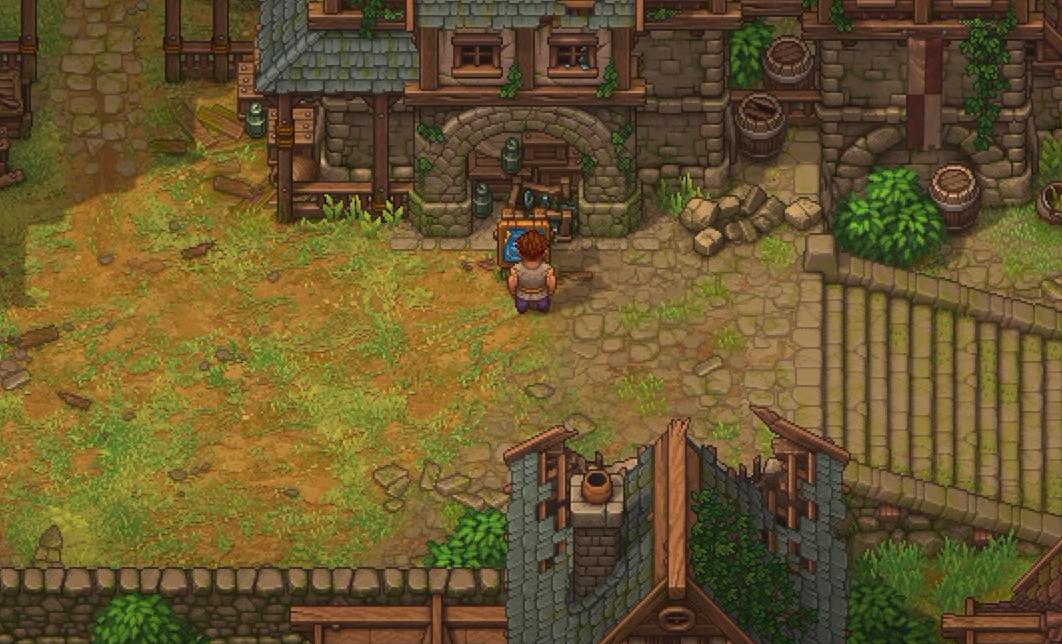
The Writing Desk in Graveyard Keeper 2 is built in the basement of the tower where you meet the Plague Doctor. It becomes available through Writing Basic and costs 4 Wooden Planks, 6 Bronze Nails, and 1 Polished Bronze. Once it's placed, the desk becomes much more than a prayer station: it handles the paper-and-ink chain behind Stories, notebooks, Science Kits, Music Notes, and nearly every prayer you'll use with the church.
Jump To Section:
Where to Build the Writing Desk
Build Requirements
What the Writing Desk Does
Ink, Paper, and Stories
Writing Desk Prayers
Notebooks, Science Kits, and More
What to Make First
Where to Build the Writing Desk
The Writing Desk is built in the basement of the tower where you meet the Plague Doctor.
If you've already unlocked the recipe but can't figure out where to place it, don't search the yard around your house, the church, or your normal outdoor work zones. Head back to the tower basement and use the building interface there.
This placement also makes more sense once the desk starts opening the larger writing chain. You're not building a portable crafting table for basic materials; you're establishing the workstation that handles much of Graveyard Keeper 2's writing, research, and prayer production.
Writing Desk Build Requirements
The Writing Desk is unlocked through Writing Basic. To construct it, bring the following materials:
Writing Desk
4 Wooden Planks
6 Bronze Nails
1 Polished Bronze
Unlock: Writing Basic
The Polished Bronze is the material most likely to hold up an otherwise ready desk. Wooden Planks and Bronze Nails already appear throughout early construction, while Polished Bronze pushes you farther into the bronze crafting chain.
The workstation itself doesn't consume fuel, and the current full-game data lists 24 recipes at the Writing Desk. It also isn't an automated workstation, so anything you write here remains a manual part of your production chain.
The Writing Desk Is Really a Production Chain
It's easy to look at the Writing Desk as the place where you make a better prayer and stop there. In practice, several of its own products become ingredients for later recipes on the same desk.
Skin can become a Leather Scroll. Leather Scrolls feed into Clean Paper and notebooks. Ink is produced here as well. Faith, Clean Paper, and Ink can then be turned into a Story, and Stories are used again when writing prayers, Primers, Dictionaries, and other advanced items.
So when a prayer recipe looks like it needs five different systems before you can make it, trace the ingredients backward. A surprising amount of that chain comes back to this one workstation.
Start With Ink, Paper, and Stories
Three materials show up over and over at the Writing Desk: Clean Paper, Ink, and Stories. Getting those into regular production makes the rest of the workstation much easier to use.
Ink is crafted in batches of four using Ash, Water, and Melted Fat. Clean Paper can be produced from Leather Scrolls, while the desk can also create the Leather Scrolls themselves from Skin once the appropriate writing technology is available.
Stories sit one step farther into the chain. A standard Story requires 3 Faith, 2 Clean Paper, and 1 Ink.
Core Writing Materials
Ink ×4 — Ash + Water + Melted Fat
Clean Paper — made through the paper/writing chain
Story — 3 Faith + 2 Clean Paper + 1 Ink
That Story recipe also explains why the Writing Desk eventually intersects so heavily with the church. If you're short on the Faith needed to keep writing, my Graveyard Keeper 2 Faith guide covers sermons, Temple quality, Gratitude, and increasing your weekly Faith income.
Prayer Recipes Move From Paper to Notebooks
The prayer progression at the Writing Desk has a useful pattern. Early prayers use Clean Paper directly, while more advanced options replace those sheets with notebooks.
The Basic Prayer, Prayer for Faith, and Prayer for Money each use 1 Story, 3 Clean Paper, and 1 Ink. Prayer for Faith and Prayer for Money arrive through Religious Writing I, giving you a choice between leaning harder into Faith production or church income.
The next group uses a Blank Softcover Notebook instead of three sheets of Clean Paper:
Softcover Prayer Recipes
Combo Prayer
Combat Prayer
Harvest Prayer
Prayer for Repose
Prayer for Excellence
Prayer for Storms
Each uses 1 Story + 1 Blank Softcover Notebook + 1 Ink.
Higher-end prayers such as Prayer for Likes, Hypno Prayer, and Prayer for Old God move to Blank Hardcover Notebooks while keeping the Story and Ink requirement.
That progression gives you a good warning before spending materials: unlocking a new prayer doesn't necessarily mean you're ready to mass-produce it. Your paper chain has to keep pace with the prayer tier you're entering.
Prayer choice then feeds back into the wider sermon system. Town Gratitude determines how much congregation support you can actually bring into church, so the Graveyard Keeper 2 Town Gratitude guide is worth pairing with your Writing Desk progression once you're actively crafting better sermons.
The Desk Also Makes Notebooks, Science Kits, and Writing Tools
Prayer crafting is only part of the workstation's value. The Writing Desk also produces several items that push other progression systems forward.
Blank Softcover Notebooks can be made from a Leather Scroll and Clean Paper, and those notebooks are then consumed by advanced prayers as well as later writing recipes.
The Primer and Dictionary both combine a Blank Softcover Notebook, Ink, and a Story, with the Dictionary requiring a higher-quality Story than the Primer.
Science Kits are another branch entirely. Science Kit I uses an Alchemy Flask I, 5 Clean Paper, and 1 Ink, while Science Kit II upgrades that requirement to an Alchemy Flask II, a Blank Softcover Notebook, and 2 Ink. Each recipe produces three kits.
Music Notes are also written here from Clean Paper and Ink once Church Music I is unlocked.
This is why stockpiling only enough writing supplies for one prayer can become annoying later. Paper and Ink don't belong to one recipe family; they feed several different progression paths from the same desk.
What Should You Make First at the Writing Desk?
I wouldn't start by crafting every newly unlocked recipe once just because it's available. The Writing Desk works better when you establish its input chain first.
Build some Ink, make sure you have access to Clean Paper, and keep enough of both available to create Stories when needed. From there, let your current progression decide where those materials go.
If church progression is holding you back, move into Stories and the prayer you actually plan to use. If research or another crafting chain needs Science Kits, don't burn your entire paper reserve on prayers first. If you've reached softcover recipes, keep notebooks in reserve because multiple later crafts compete for them.
In other words, the Writing Desk is less about finding one best recipe and more about not starving the next recipe in the chain. Once Ink, paper, Stories, and notebooks are flowing reliably, the workstation stops being a progression roadblock and becomes the hub connecting your Faith, sermons, research, and advanced writing together.